

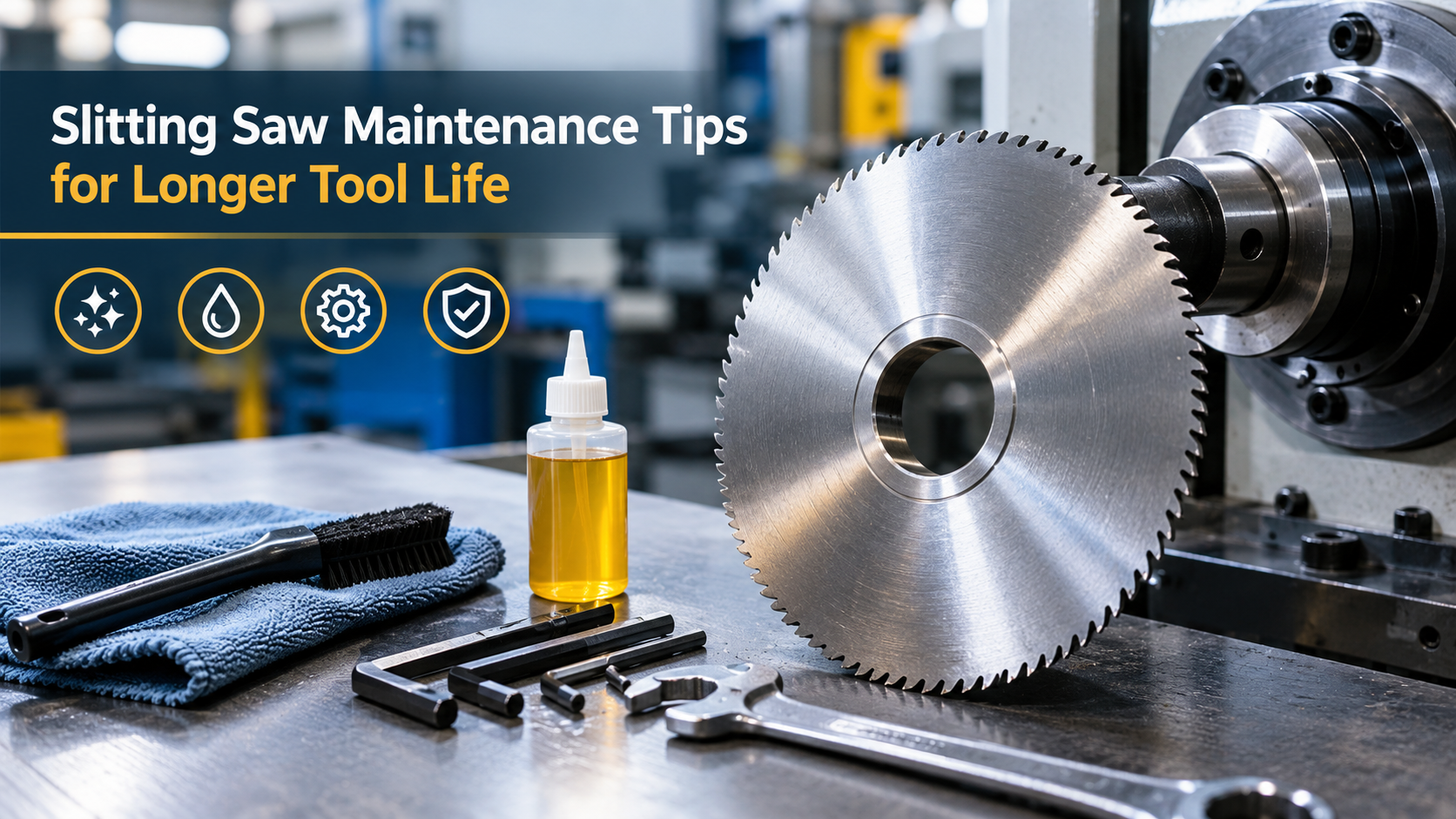
Precision cutting depends on more than selecting the right machine and material. A slitting saw also needs proper maintenance, handling, and operating conditions to deliver consistent results over time.
In manufacturing environments, cutting tools are exposed to friction, heat, chips, vibration, and demanding production cycles. Even a high-quality tool can experience premature wear when maintenance is overlooked. Establishing a practical maintenance routine can help extend tool life, improve cutting consistency, reduce unexpected downtime, and maintain the quality of finished components.
Select the Right Slitting Saw for the Application
Maintenance begins before the tool is installed. Choosing a saw that matches the material, cutting depth, machine setup, and application can significantly influence its service life.
Factors such as saw diameter, thickness, tooth configuration, material, and cutting conditions should be considered during selection. A tool that is too thin for an application may be more susceptible to deflection, while an unsuitable tooth configuration can increase cutting resistance.
Understanding the requirements of the job helps prevent unnecessary stress on the cutting tool from the beginning.
Inspect the Tool Before Every Use
A quick inspection before installation can identify problems before they affect production.
Look for chipped or damaged teeth, excessive wear, cracks, corrosion, or distortion. The mounting hole and surrounding surfaces should also be clean and free from damage. If a saw shows visible defects, it should not be placed into service without proper evaluation.
Routine inspections are particularly important in high-volume machining environments, where small problems can quickly develop into larger tooling issues.
Keep the Saw Clean
Metal chips, cutting residue, and contaminants can accumulate on a cutting tool during operation. If these materials are not removed, they can interfere with proper cutting and contribute to excessive wear.
After use, clean the saw using an appropriate method for its material and finish. Avoid harsh cleaning practices that could damage cutting edges or protective surfaces.
Clean storage and handling also help prevent contamination from being transferred back onto the machine or workpiece.
Check the Arbor and Mounting Setup
A properly maintained saw can still perform poorly if the mounting system is not in good condition. The arbor, spacers, washers, and related components should be checked regularly.
Dirt or debris between mounting surfaces can cause the saw to sit unevenly. This may lead to runout, vibration, uneven tooth loading, and poor cutting results.
Before installation, make sure all contact surfaces are clean and properly seated. The saw should be mounted securely according to the machine manufacturer’s specifications.
Monitor Cutting Conditions
Operating conditions have a direct effect on tool life. Excessive cutting speed, incorrect feed rates, or unsuitable cutting parameters can increase heat and mechanical stress.
If a tool begins showing unusual wear, review the machining parameters instead of immediately assuming the tool itself is the problem.
Finding the right balance between speed and feed can reduce unnecessary stress while maintaining productive cutting performance. Conditions should also be adjusted according to the material being machined.
Control Heat During Cutting
Excessive heat can accelerate wear and negatively affect cutting edges. Heat management becomes particularly important when working with difficult-to-machine materials or performing extended production runs.
Where appropriate, use the recommended coolant or lubrication method for the application. Ensure that coolant reaches the cutting area effectively rather than simply circulating around the machine.
Proper chip evacuation also contributes to temperature control by reducing the possibility of chips repeatedly contacting the cutting zone.
Reduce Vibration and Runout
Vibration is one of the common causes of premature cutting-tool wear. It can create uneven tooth loading, poor surface finishes, excessive noise, and inconsistent cuts.
Check the machine setup, workholding arrangement, arbor condition, and tool mounting whenever vibration occurs. The saw should run smoothly and remain properly aligned throughout the cutting operation.
Reducing unnecessary overhang can also help improve rigidity. A stable setup places less stress on the cutting edges and can contribute to longer service life.
Maintain Proper Chip Evacuation
Efficient chip removal is essential during slitting operations. When chips become trapped in the cutting area, they can increase friction and heat and may interfere with the cutting action.
Make sure the machine’s chip evacuation system is working correctly. Air or coolant can sometimes assist with removing chips, depending on the application and machine configuration.
For operations involving narrow slots or deeper cuts, chip evacuation deserves particular attention because restricted space can make chip buildup more likely.
Avoid Excessive Tool Deflection
Tool deflection can affect both accuracy and tool longevity. Applying excessive pressure or using unsuitable cutting parameters can cause the saw to deflect during operation.
A rigid machine setup, appropriate workholding, and correct tooling configuration can help minimize this issue.
Operators should also avoid forcing a tool through material when cutting resistance increases unexpectedly. Investigating the cause is usually more effective than simply increasing feed pressure.
Store Cutting Tools Properly
Proper storage is often overlooked after machining is complete. Cutting tools should be protected from moisture, contamination, impacts, and contact with other tools.
Avoid placing saws loosely in drawers or containers where their teeth can strike other metal objects. Individual compartments, protective packaging, or suitable tool-storage systems can help protect cutting edges.
For longer-term storage, follow appropriate recommendations for corrosion protection and environmental conditions.
Track Tool Performance
Keeping basic records can make maintenance more effective. Operators can record installation dates, machining applications, materials, operating conditions, and observed wear.
Over time, these records can reveal useful patterns. For example, a particular material may consistently cause faster wear, or a specific machining condition may produce excessive vibration.
Performance tracking can help manufacturers establish realistic replacement or inspection intervals instead of relying solely on visual inspection.
Know When Replacement or Reconditioning Is Needed
Maintenance does not mean using a tool indefinitely. Eventually, every cutting tool reaches a point where replacement or professional reconditioning becomes appropriate.
Signs such as repeated burr formation, declining cutting accuracy, increased vibration, unusual noise, excessive heat, or visibly damaged teeth should receive attention.
Continuing to use a severely worn tool can affect both productivity and workpiece quality. In some cases, professional sharpening or reconditioning may restore the cutting performance, depending on the tool design and condition.
The Importance of Consistent Tool Care
Extending the working life of a slitting saw is not based on one maintenance action. It comes from combining appropriate tool selection, careful installation, correct machining parameters, effective cooling, chip management, regular inspection, and proper storage.
Manufacturers such as Maxwell Slitter Industries understand the importance of precision cutting tools in demanding industrial applications. Consistent attention to tooling condition can help manufacturers maintain reliable production while reducing unnecessary interruptions caused by premature tool wear.
A maintenance program should also be practical enough for operators to follow consistently. Simple checks performed before and after machining can prevent many avoidable problems.
Final Thoughts
A well-maintained cutting tool can provide more consistent performance and help manufacturers get greater value from their tooling investment. Regular inspections, clean mounting surfaces, controlled cutting conditions, effective chip removal, and proper storage all contribute to longer tool life.
The key is to treat maintenance as part of the machining process rather than an occasional task. By monitoring tool condition and addressing problems early, manufacturers can improve cutting reliability, protect workpiece quality, and reduce unnecessary tooling costs.
