

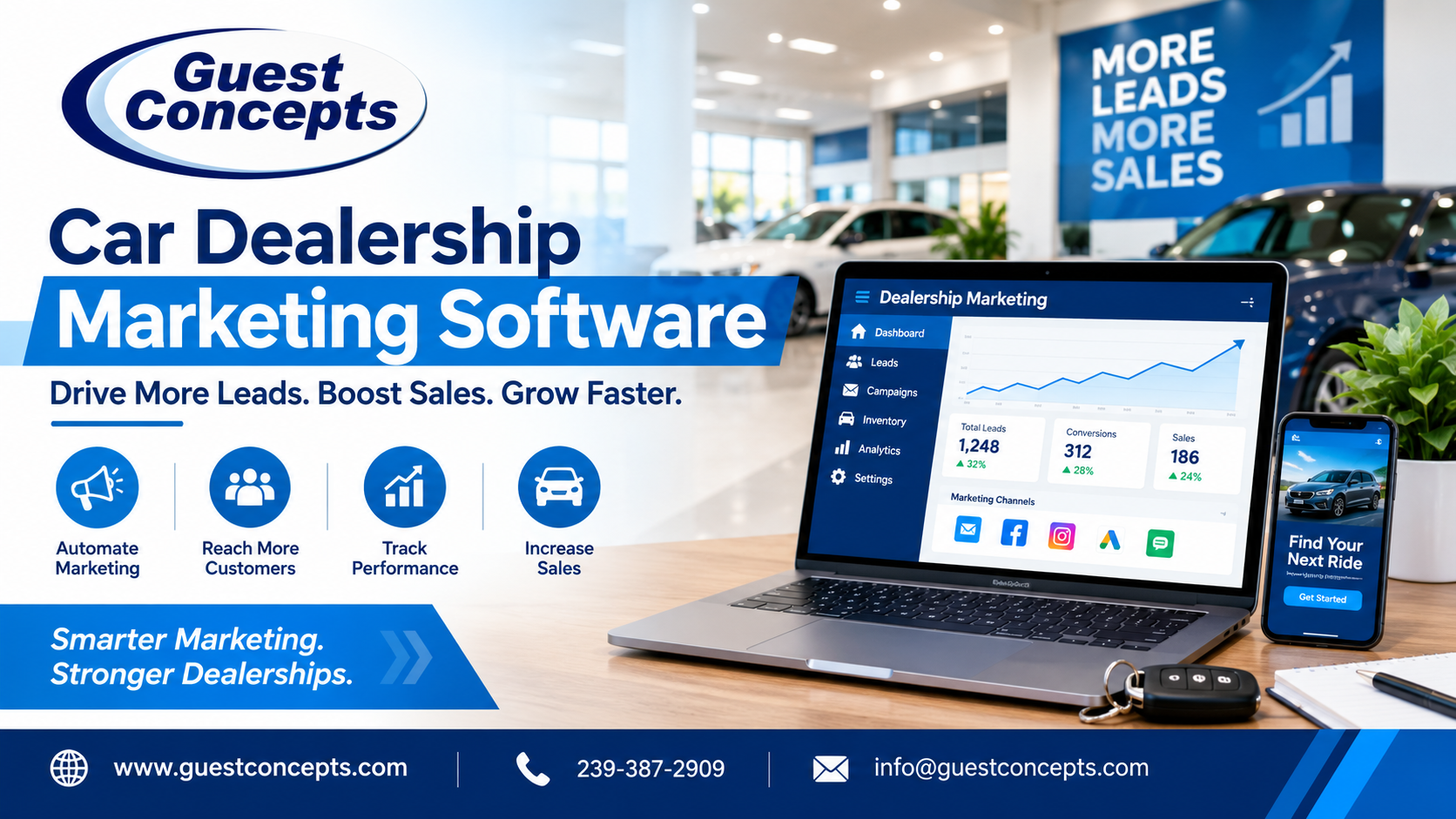
A dealership can spend heavily on advertising and still lose sales if the right customer is not reached at the right time. Today’s buyers move between search engines, dealership websites, social media, messaging platforms, and showroom visits before making a decision. Car dealership marketing software helps dealerships connect these touchpoints, organize customer data, automate follow-ups, and turn more marketing activity into measurable sales opportunities.
Modern dealership software increasingly combines marketing automation, CRM capabilities, customer engagement, analytics, and digital retailing. Industry research also shows how important connected digital experiences have become: Cox Automotive reported that mostly digital buyers saved an average of 42 minutes at the dealership and had higher reported satisfaction than light-digital buyers.
What Is Car Dealership Marketing Software?
Car dealership marketing software is a technology platform designed to help automotive retailers attract, engage, nurture, and convert potential vehicle buyers.
Instead of managing campaigns, customer information, lead follow-ups, and performance reports across disconnected tools, dealerships can centralize important marketing activities.
Typical capabilities include:
- Lead capture and lead management
- Customer segmentation
- Email and SMS campaigns
- Automated follow-ups
- Website and digital engagement
- Campaign performance tracking
- Customer relationship management
- Marketing attribution
- Sales and marketing analytics
- Integration with dealership systems
The goal is not simply to generate more traffic. It is to help dealerships understand which prospects are engaging, where they came from, what they are interested in, and what action should happen next.
Why Dealerships Need Marketing Automation
Automotive customers rarely follow a simple buying journey. One shopper may discover a vehicle through an online advertisement, visit a dealership website, submit a lead form, compare financing options, receive a salesperson’s message, and eventually visit the showroom.
Without an organized system, opportunities can easily become fragmented.
1. Capture Leads From Multiple Channels
Effective automotive marketing software can help bring leads from different sources into a centralized workflow. This gives sales teams better visibility into inquiries instead of forcing employees to check multiple platforms manually.
2. Automate Customer Follow-Ups
Speed and consistency matter in lead nurturing. Automated workflows can send relevant messages, reminders, appointment confirmations, and follow-ups based on customer actions.
This allows salespeople to spend more time having meaningful conversations instead of repeatedly performing administrative tasks.
3. Personalize Marketing Campaigns
Generic advertising can struggle to address the different needs of today’s vehicle shoppers. Marketing software can use customer and behavioral information to create more targeted campaigns.
For example, a dealership could create different campaigns for:
- New vehicle shoppers
- Used vehicle buyers
- Trade-in prospects
- Previous customers
- Finance-focused shoppers
- Customers approaching a vehicle upgrade
Personalization can make marketing communication more relevant while helping dealerships manage large customer databases more efficiently.
Features to Look for in Dealership Marketing Software
Not every platform offers the same capabilities. Dealerships should evaluate software according to their sales process, marketing channels, customer volume, and integration requirements.
CRM and Lead Management
A strong dealership CRM platform should provide a centralized view of customer interactions, lead status, vehicle interests, appointments, and follow-up activity. Modern automotive CRM solutions increasingly combine customer data with automation and analytics.
Marketing Automation
Look for workflows that can trigger communications based on lead activity, customer segments, appointments, purchases, or other relevant events.
Campaign Analytics
Marketing teams need more than impressions and clicks. Useful reporting should help answer questions such as:
- Which campaigns generated leads?
- Which sources produced showroom visits?
- Which leads converted into sales?
- How quickly are leads being contacted?
- Which campaigns deserve additional investment?
Lead-source and campaign attribution are increasingly important capabilities in automotive CRM and marketing systems.
Omnichannel Customer Engagement
Customers may communicate through email, phone, websites, social platforms, and messaging applications. Connecting these interactions can provide sales teams with a more complete picture of the customer journey. Automotive retail platforms increasingly emphasize unified communication across these channels.
How Marketing Software Can Improve Dealership Performance
The biggest advantage is the connection between marketing activity and sales execution.
Suppose a dealership launches a campaign promoting a new SUV. Instead of simply counting clicks, an integrated system can capture interested shoppers, organize their information, trigger follow-up communication, and provide sales teams with actionable lead data.
This creates a more connected path:
Advertisement → Lead → Engagement → Follow-Up → Appointment → Showroom Visit → Sale
Connected systems can also reduce the information gaps that occur when marketing, sales, service, and operations use disconnected technologies. Cox Automotive has highlighted integration between these functions as an important component of modern dealership technology.
Choosing the Right Solution
Before investing, dealership leaders should consider:
- Does the platform integrate with existing CRM, DMS, and retailing tools?
- Can it automate repetitive marketing tasks?
- Does it provide useful campaign attribution?
- Can multiple locations use the same system?
- Does it support customer segmentation?
- Can sales teams easily access lead information?
- Are reports understandable and actionable?
- Is the platform scalable as inventory and customer volume grow?
The right solution should fit the dealership’s existing workflow rather than creating another disconnected system.
Conclusion
Car dealership marketing software can help dealerships move beyond basic advertising by connecting lead generation, customer engagement, marketing automation, CRM data, and sales follow-up. As vehicle shoppers increasingly combine digital research with showroom interactions, dealerships need technology that supports the complete customer journey.
For dealerships looking to strengthen customer engagement, streamline sales workflows, and create a more connected automotive retail experience, explore the technology solutions available from Guest Concepts at www.guestconcepts.com.
