

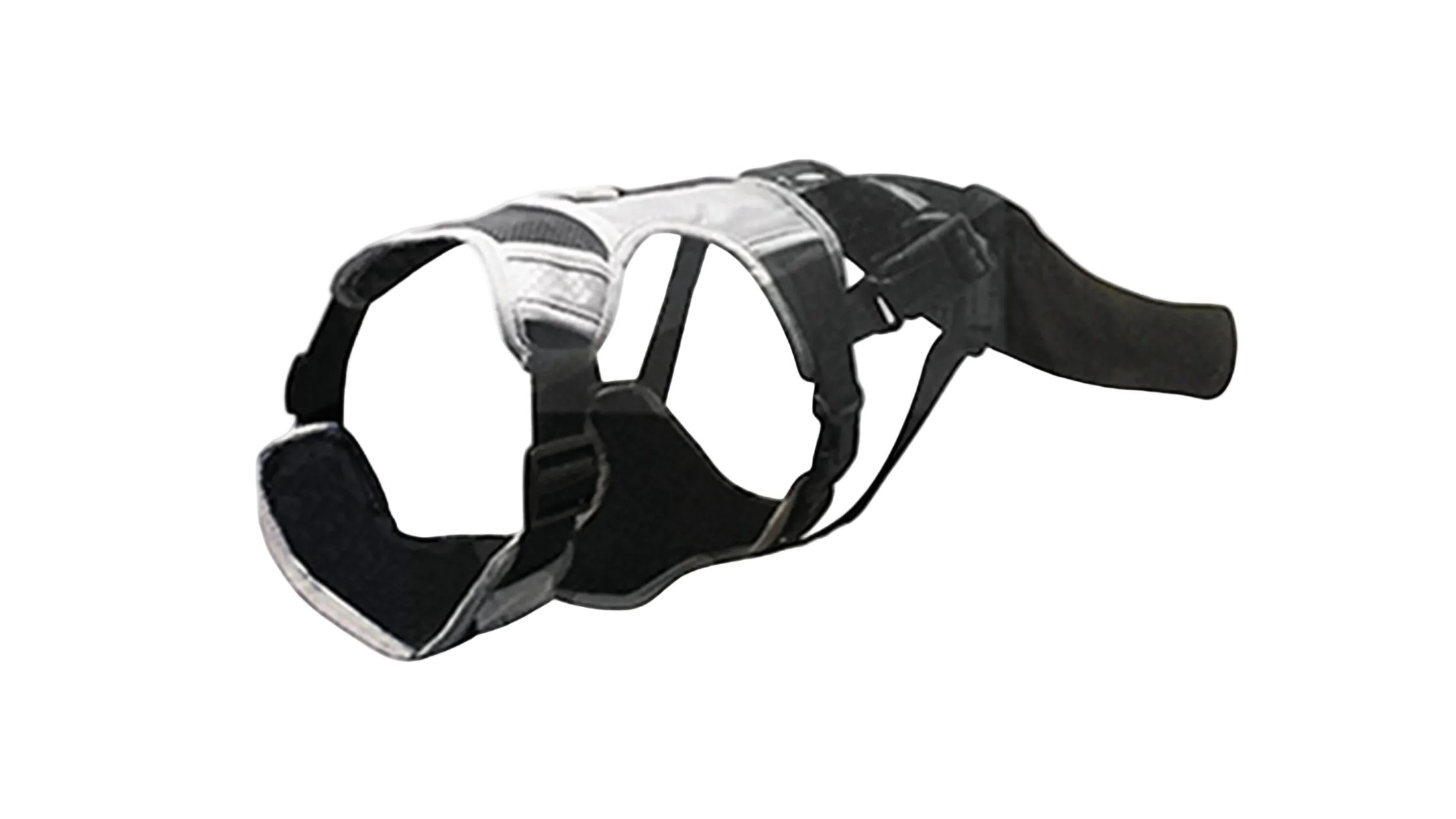
A dog with a tail injury needs more than a quick bandage. Repeated wagging, licking, chewing, and hitting hard surfaces can reopen the same wound again and again. A dog happy tail protector can help create a stable layer of protection while allowing the dog to move normally. The right system can also reduce problems that make tail wounds difficult to manage, such as slipping wraps, poor airflow, and constant access to the injured area. For dogs with Happy Tail Syndrome, cysts, chronic wounds, or other tail injuries, proper protection can make daily care easier and support a more consistent recovery plan.
1. It Helps Prevent Repeated Tail Injuries
Happy Tail Syndrome often becomes a cycle. A dog hits its tail against a wall, crate, door, or furniture. The wound starts to heal, then another hard wag causes it to open again.
A protective sleeve helps cover the injured area from these repeated impacts. The K9 TailSaver combines a padded tail sleeve with a body harness, helping keep the protection centered while the dog moves.
2. It Can Stay Secure During Daily Movement
A loose cover does little good if a dog can shake it off within minutes. This is one reason a simple sleeve may not work well for active dogs.
The K9 TailSaver uses a chest harness, wag strap, and anti-twist strap. Together, these parts anchor the sleeve to the dog’s body and help limit sliding and rotation.
3. It Protects the Tail From Licking and Chewing
Dogs often lick or chew an injured tail because it feels itchy, painful, or unusual. This can disturb the wound and make recovery harder.
A protective cover creates a barrier between the dog’s mouth and the injured area. This can be especially useful for dogs that repeatedly destroy traditional wraps or bandages.
Dogs that chew their protection may still need close supervision during the first adjustment period. The product’s guidance recommends using temporary protective measures when needed while the dog gets used to wearing it.
4. Better Airflow Can Help Keep the Area Dry
Moisture can make wound protection more difficult to manage. A covering that traps heat and moisture may also become uncomfortable.
The K9 TailSaver uses padded AirMesh material designed to provide airflow while wicking moisture away from the tail. Keeping the area better ventilated can make the protective setup more comfortable during recovery.
5. It Allows More Normal Daily Activities
Tail protection should not make every part of a dog’s day difficult. Dogs still need to walk, sleep, play, use the bathroom, and spend time in their normal environment.
A well-fitted happy tail protector for dogs is designed to support these everyday activities. The K9 TailSaver can be worn during activities such as walking, sleeping, crating, and daycare, according to the product information.6.
6. It Can Make Wound Care More Practical
Repeatedly removing and replacing a bandage can be frustrating for both the dog and the owner. It can also make it harder to maintain consistent protection.
A sleeve-and-harness system gives owners easier access for routine checks and care. The K9 TailSaver is also machine washable, which helps when the device is being used throughout a recovery period.
7. Proper Sizing Can Improve Comfort and Protection
Even a well-designed tail protector needs the right fit. A sleeve that shifts may expose the injury, while incorrect strap adjustment can cause discomfort.
Happy TailSaver recommends checking both approximate weight and back length, measured from the base of the neck to the base of the tail. Breed can also help with sizing. Custom sizing is available when standard options do not provide the right fit.
What Should Dog Owners Check After Fitting?
After putting on a tail protector, owners should watch how it moves with the dog. The sleeve should remain centered over the hips and should not rotate excessively.
If the protection slips, falls off, or causes rubbing, the straps may need adjustment. Happy TailSaver also provides fitting instructions and photo-based support for owners who need help getting the setup right.
When Is Professional Advice Important?
A tail wound can involve infection, exposed tissue, a fracture, or another condition that needs veterinary attention. A protective device should support proper care, not replace a veterinarian’s assessment.
For serious, worsening, or infected injuries, veterinary guidance should come first. A tail protector can then help protect the area from further impact while the recovery plan continues.
Conclusion
A good tail protection system does more than cover an injured tail. It can help reduce repeated impact, limit access to the wound, improve airflow, stay secure during movement, and make daily care easier.
The K9 TailSaver was developed around these practical problems and includes fitting guidance and direct support for owners who need help. Its sizing system also considers body shape and back length rather than relying on weight alone.
