

College football recruiting in Pennsylvania has never been more competitive, or more visual. Programs like Penn State, Pitt, Notre Dame, Ohio State, and West Virginia are all actively mining the Keystone State for talent. Pennsylvania consistently produces top-tier recruits with multi-school offer sheets, and the recruitment process is starting earlier than most families expect. According to 247Sports data, some of the most sought-after Pennsylvania prospects in the 2026 class committed during their sophomore year. What many of those families discovered along the way is that talent alone gets you noticed. Presentation determines whether you stay on the board.
NIL Changed the Recruiting Conversation Permanently
NIL didn’t just give college athletes the ability to earn. It introduced marketability as a measurable factor in how programs evaluate prospects. College football coaching staffs now assess not only a recruit’s athletic profile but their social media presence, their personal brand, and their ability to generate attention around the program.
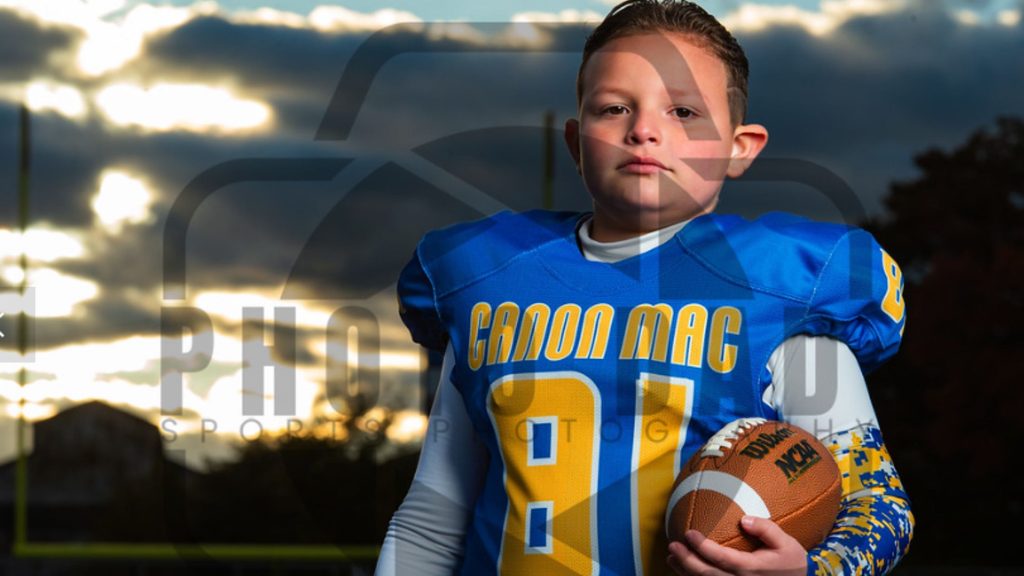
That shift has filtered down to high school recruiting in a way that’s still not fully appreciated by families outside the process. Individual athlete portraits are no longer just for the yearbook or the senior recognition wall. They’re part of how a recruit presents themselves to programs that are evaluating dozens of candidates with similar athletic profiles. A professionally shot image on a NCSA profile or a recruiting email reads differently than a screenshot from a game video or a cropped phone photo.
The difference isn’t subtle. Coaches receiving recruitment correspondence notice it.
What a Recruitment-Grade Portrait Session Actually Includes
The portrait sessions that serve recruitment purposes are built around a different intent than standard team or yearbook photography. A few distinctions worth understanding:
- Clean individual images that isolate the athlete against a neutral or sport-contextual background
- Position-specific action elements: throwing mechanics for quarterbacks, stance and leverage shots for linemen, route-running or catching setups for skill positions
- Helmet-off headshots formatted for digital platforms and printed correspondence
- File resolutions suited to both social media and print formats without reprocessing
- A short-form set of three to five images that tell a coherent visual story about the athlete
The final point matters more than most families realize. A single great image is useful. A coherent set of images shows the athlete from multiple angles. That range gives a program more to work with and signals a level of preparation that reflects well on the recruit.
When to Book Relative to the Recruiting Timeline
The recruiting calendar has specific windows of intense activity. Portrait sessions planned around those windows are considerably more useful than those booked without that timing in mind. For Pennsylvania athletes targeting Penn State, Pitt, or similar programs, junior fall is when correspondence accelerates. Having strong visual assets in place before that window opens is what pays forward most directly.
Booking individual athlete portraits the summer before junior year, or at the latest during August camp, gives families enough lead time to build a recruiting profile before fall begins. Waiting until senior year is a strategy that works for athletes who haven’t yet attracted interest. For those who have, it risks arriving late to a conversation that’s already been decided.
Where American Football Team Photography Fits In
Individual recruitment portraits and American football team photography serve different but complementary purposes in the broader visual strategy for a player and their program. Team photos establish the collective identity: the roster, the coaching staff, the program’s visual brand. Individual portraits establish the athlete’s personal identity within and beyond the program.
Programs in western Pennsylvania that work with a consistent photographer across multiple seasons build a visual record that serves both purposes over time. Photographers like Photo Dad Sports Photography work within exactly that model, providing families and programs with coverage that compounds in value season over season rather than delivering a single-use gallery.
The Offer Isn’t Just About Film Anymore
The way college programs identify and evaluate talent in 2026 is more layered than it has ever been. Film still matters. So does the combine number and the all-state ranking. But the visual presentation of an athlete, their readiness, professionalism, and personal brand, has become part of the equation. That is not changing. Pennsylvania has the talent that programs want, and the families who understand that talent needs to be packaged as well as developed are the ones whose athletes tend to stay on offer sheets longest. A strong set of individual athlete portraits is a small investment in that direction. The return, measured in the right program calling back, is rarely small.
