

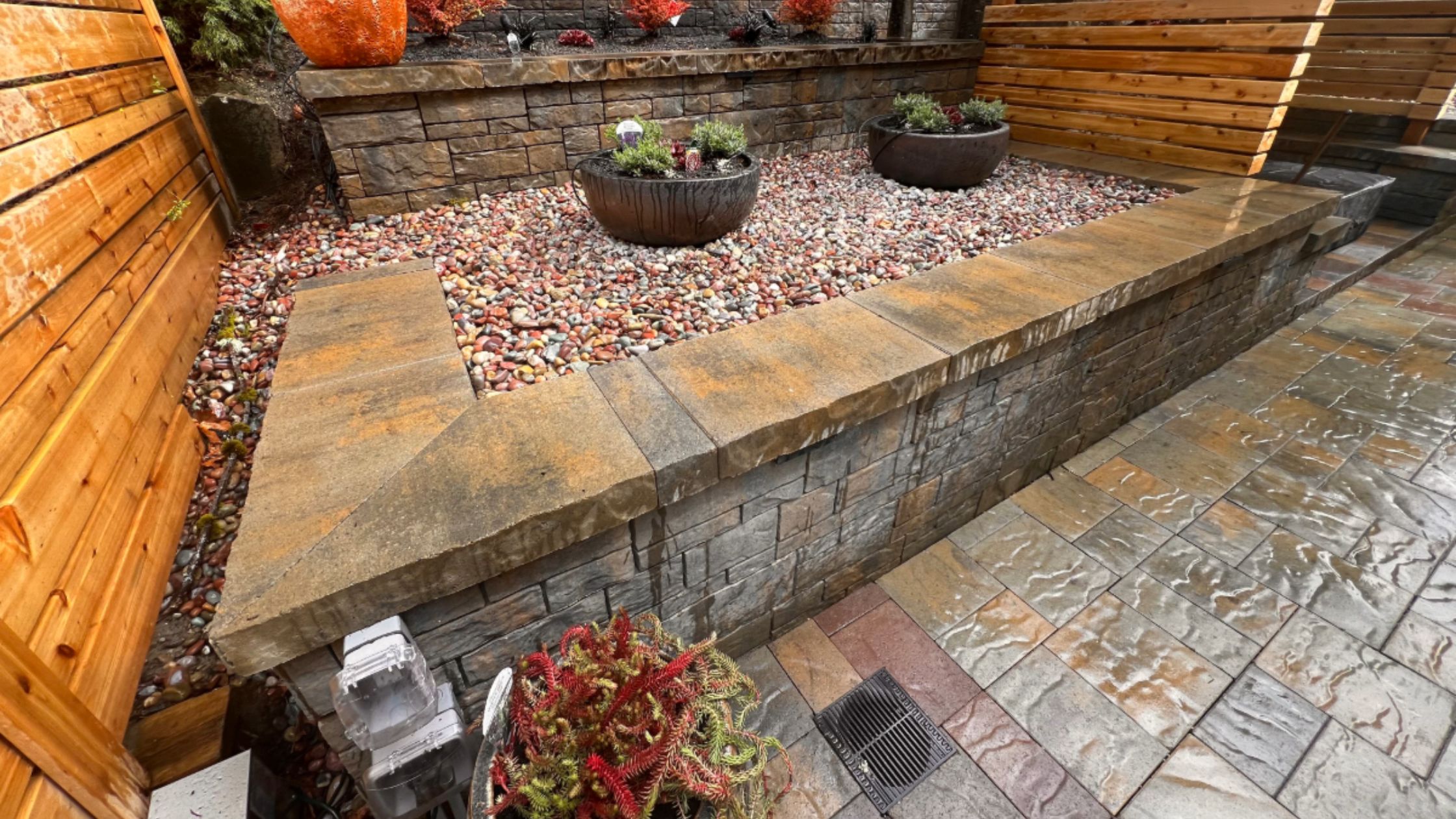
There is a category of landscape problem that commercial property managers almost universally deal with by not dealing with it. Erosion on a sloped section. A planting bed border that keeps migrating downhill. A parking lot edge where soil has been slowly winning its argument with the asphalt for about four years. Commercial retaining wall installation in Everett exists precisely to resolve these situations, and yet the decision to actually do something about them tends to get deferred until the erosion channel is deep enough to create a trip hazard or the parking lot edge fails in a way that is no longer deniable. The Pacific Northwest slope conditions that make retaining structures necessary also make the consequences of skipping them fairly dramatic.
Why Slopes and Wet Winters Are a Difficult Combination
Western Washington does not have a gentle relationship with gravity and water. The Everett area receives concentrated rainfall from October through April, and on any property with grade change, that water is actively moving soil whether or not anyone is watching. Clay-heavy soils common to Snohomish County retain moisture to the point of saturation and then begin to shift. Slowly at first, then with more conviction.
The sequence on unretained slopes is fairly predictable. Surface erosion begins at the top of a grade change. Mulch disappears from sloped beds after a few heavy rain events. Exposed soil compacts and begins sheeting during peak rainfall. By spring, what looked like a minor slope maintenance issue has developed into a genuine grading problem, often accompanied by sediment deposits on hardscape or drainage infrastructure below the slope.
A properly engineered retaining wall interrupts that sequence entirely. It holds the grade, keeps soil in place, and when designed with adequate drainage behind the wall face, manages the hydrostatic pressure that builds up in saturated Pacific Northwest soils over winter. That last part, the drainage, is the piece most visible in the failure histories of walls that did not last.
What Retaining Wall Installation Actually Involves
The range of materials used in commercial retaining wall installation in Everett is wider than most property managers realize. Segmental concrete block is the most common choice for mid-height commercial applications. It is durable, cost-effective, and available in profiles that look appropriate in almost any commercial context. Poured concrete or concrete masonry unit walls handle heavier loads and greater heights. Timber and modular systems work well in lower-load situations or where a natural visual character is the goal.
What matters more than material choice is engineering. Any wall retaining more than four feet of soil should be engineered for the specific site conditions, soil type, and load conditions it will face. That means a geotechnical assessment, a designed batter and footing specification, and drainage provisions that account for the water pressure a saturated soil column will exert against the wall face over time. Walls built without these inputs tend to develop problems on a schedule that is both predictable and inconvenient.
Permitting is also a factor. Everett requires building permits for retaining walls exceeding a certain height threshold, and properties that install without permits face the familiar combination of stop-work orders, mandatory removal, and reinspection costs. Handling the permit process upfront is less expensive than discovering it was necessary after the wall is already in.
The Connection to Year-Round Property Maintenance
Retaining walls do not exist in isolation from the rest of a property’s maintenance program. For residential communities and mixed-use developments specifically, apartment complex maintenance services in Everett that include regular wall inspections catch the early indicators of drainage failure, cap block displacement, or batter shift before they become structural concerns. A wall that is checked annually and has minor repairs addressed promptly will outlast one that is ignored until a visible failure forces the conversation.
The inspection items are not complicated. Check the drainage outlets behind and below the wall face for blockage. Look for any bulging or bowing in the wall face that indicates soil pressure buildup. Check cap blocks or coping for displacement. Look at the soil surface above the wall for signs of settlement that could indicate voids developing behind the face. None of this requires a structural engineer on an annual basis. It does require someone actually walking the wall and knowing what to look for.
Properties that integrate wall inspections into their spring and fall maintenance cycles rarely face emergency retaining wall failures. Properties that treat retaining walls as permanent features requiring no attention produce a reliable stream of emergency calls.
Getting Ahead of the Grade Change Problem
The properties that manage slope conditions well are not doing anything complicated. They identified the grade change problem before it became a drainage or erosion crisis, built the right structure for the site conditions, and included wall maintenance in the scope of their ongoing apartment complex maintenance services in Everett. That sequence is available to any commercial property. Most just wait longer than is financially sensible to start it.
Slope conditions in western Washington do not improve on their own. The erosion cycle that starts in October tends to present its bill in April, at which point the cost of commercial retaining wall installation in Everett looks considerably more reasonable than it did the previous spring. Getting there before the bill arrives is almost always the better calculation.
