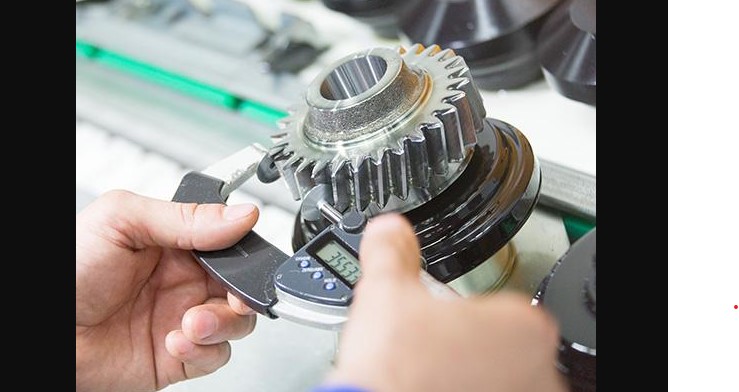
Gears are at the heart of countless mechanical systems, from automotive transmissions and industrial machinery to wind turbines and robotics. Producing gears with high precision requires specialized cutting tools, and one of the most widely used is the involute gear cutter. Its ability to generate accurate gear tooth profiles makes it an essential tool for manufacturers that prioritize quality, efficiency, and long-term performance.
As manufacturing technologies continue to evolve, the demand for precision-engineered gears has increased significantly. Modern production environments require cutting tools that deliver consistent results while minimizing downtime and material waste. Understanding how an involute gear cutter works and where it fits into the gear manufacturing process helps manufacturers make informed tooling decisions.
What Is an Involute Gear Cutter?
An involute gear cutter is a precision cutting tool designed to produce gear teeth with an involute profile, which is the most commonly used tooth geometry in modern mechanical power transmission. The involute design allows gears to maintain smooth and efficient contact even if there are slight variations in the center distance between mating gears.
These cutters are manufactured to strict dimensional tolerances to ensure that every gear tooth meets the required accuracy and performance standards.
Why the Involute Profile Is Preferred
The involute tooth profile has become the industry standard because of its mechanical advantages. Unlike other gear tooth forms, involute gears provide smooth power transmission, consistent velocity ratios, and reduced sensitivity to minor alignment errors.
Some key benefits include:
- Smooth engagement between gears
- Reduced friction and wear
- Improved load distribution
- Reliable transmission efficiency
- Easier manufacturing and inspection
These characteristics make involute gears suitable for applications where reliability and precision are critical.
Applications Across Modern Industries
Today, manufacturers rely on the involute gear cutter to produce gears for a wide range of industries.
Common applications include:
- Automotive gearboxes
- Industrial gear drives
- Agricultural equipment
- Aerospace systems
- Construction machinery
- Mining equipment
- Wind energy systems
- Robotics and automation
Each of these industries depends on gears that can operate under varying loads while maintaining accuracy and durability.
Importance of Precision in Gear Manufacturing
Even small deviations in gear tooth geometry can lead to vibration, excessive noise, reduced efficiency, and premature wear. High-quality gear cutting tools help minimize these risks by producing consistent tooth profiles throughout the production process.
Manufacturers often combine precision tooling with CNC gear-cutting machines to achieve repeatable results across large production batches. This combination helps reduce rejects while improving overall productivity.
Factors That Influence Cutting Performance
The performance of an involute gear cutter depends on several factors beyond the tool itself.
These include:
- Workpiece material
- Machine rigidity
- Cutting speed
- Feed rate
- Coolant application
- Tool coating
- Proper tool alignment
Selecting the correct machining parameters helps maximize tool life while ensuring high-quality gear production.
Maintenance Matters
Like any precision cutting tool, proper maintenance plays a significant role in achieving consistent performance.
Good maintenance practices include:
- Cleaning the cutter after use
- Protecting cutting edges during storage
- Inspecting for wear or chipping
- Reconditioning tools when appropriate
- Following recommended cutting parameters
Routine inspection helps identify wear before it affects gear quality, reducing unexpected production interruptions.
Choosing the Right Tool
Not every gear manufacturing application requires the same cutter specification. Manufacturers should consider several factors before selecting a cutting tool.
Important considerations include:
- Module or diametral pitch
- Pressure angle
- Gear material
- Required production volume
- Surface finish requirements
- Machine compatibility
Working with an experienced tooling supplier can simplify the selection process and help optimize machining performance.
Supporting Modern Manufacturing Efficiency
Today’s manufacturing facilities emphasize productivity, repeatability, and cost efficiency. High-quality cutting tools contribute directly to these goals by producing accurate gears with fewer tool changes and lower scrap rates.
Advanced materials, precision grinding techniques, and specialized coatings have further improved cutter performance, allowing manufacturers to machine tougher materials while maintaining dimensional accuracy.
As production demands continue to increase, precision tooling remains a key factor in maintaining competitive manufacturing operations.
Final Thoughts
The involute gear cutter continues to play an essential role in modern gear manufacturing by enabling the production of accurate, reliable, and high-performance gears. From automotive and aerospace applications to heavy industrial equipment, its contribution to precision engineering cannot be overstated.
Choosing the right cutter, following proper maintenance practices, and using appropriate machining parameters all contribute to better gear quality, longer tool life, and improved manufacturing efficiency. As industries continue to adopt advanced manufacturing technologies, precision gear cutting tools will remain fundamental to producing components that meet today’s demanding performance standards.
Frequently Asked Questions
An involute gear cutter is used to machine gear teeth with an involute profile, ensuring smooth power transmission, accurate meshing, and reliable performance in mechanical systems.
The involute profile provides consistent motion, reduced friction, easier manufacturing, and better tolerance to slight shaft misalignment, making it the preferred choice for most industrial gears.
Industries such as automotive, aerospace, industrial machinery, mining, robotics, agriculture, and renewable energy use involute gear cutter tools to manufacture precision gears.
Proper cleaning, correct storage, routine inspection, using recommended cutting parameters, and timely reconditioning help maximize the lifespan of an involute gear cutter.