

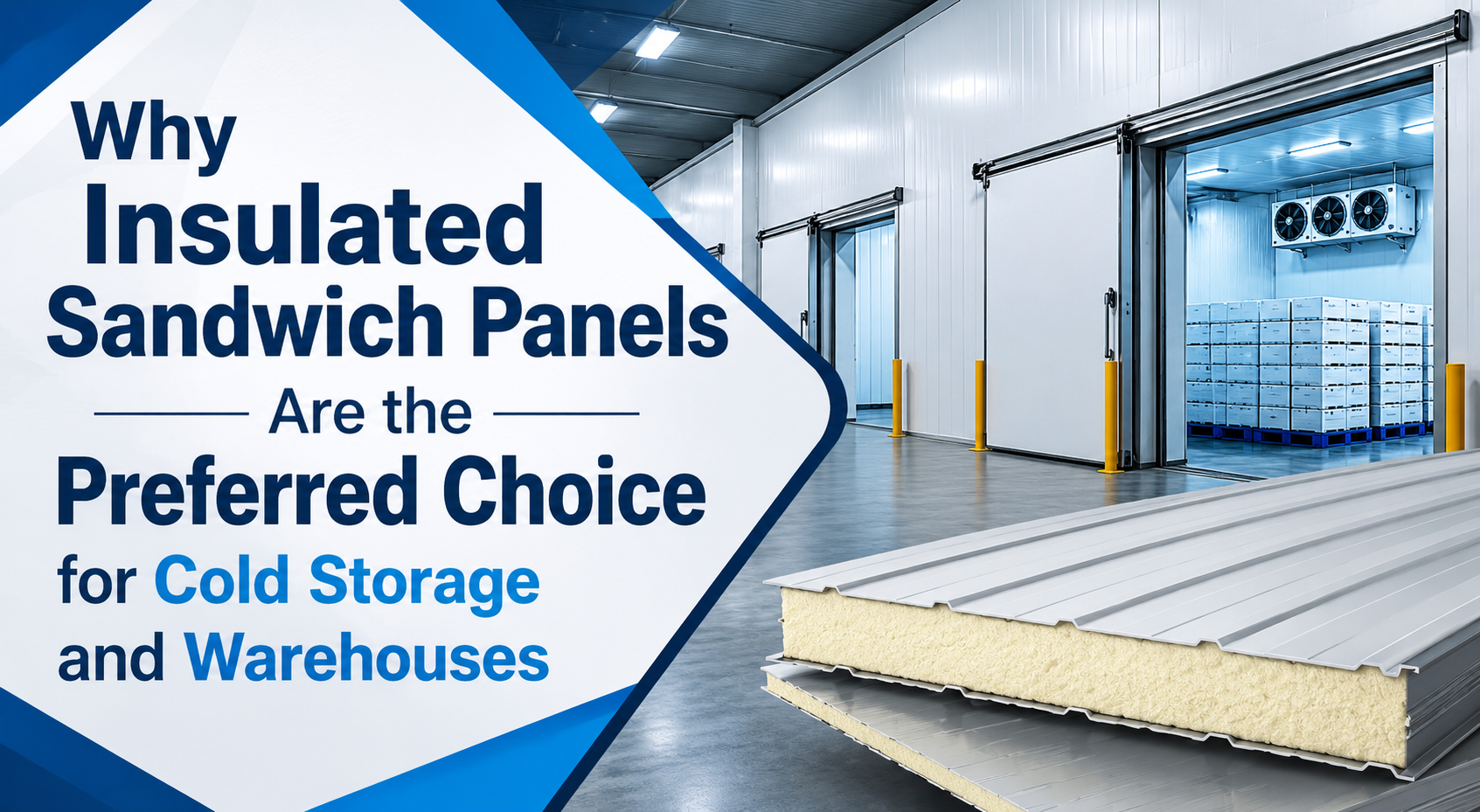
The demand for efficient, durable, and energy-saving construction materials has grown significantly in recent years. Industries such as food processing, pharmaceuticals, agriculture, logistics, and retail depend on temperature-controlled environments to maintain product quality and meet regulatory standards. As a result, insulated sandwich panels have become one of the most trusted building materials for cold storage facilities and warehouses.
Designed to provide excellent thermal insulation, structural strength, and long-term durability, insulated sandwich panels help businesses reduce energy consumption while creating reliable storage environments. Companies looking to build or upgrade modern cold storage facilities often choose solutions from TSSC Group, a trusted provider of high-quality insulated building systems for industrial and commercial applications.
What Are Insulated Sandwich Panels?
Insulated sandwich panels are prefabricated construction panels made from three primary layers:
- Outer metal facing
- High-performance insulating core
- Inner metal facing
The insulating core is commonly manufactured using materials such as:
- Polyurethane (PU)
- Polyisocyanurate (PIR)
- Mineral Wool
- Expanded Polystyrene (EPS)
These layers are permanently bonded together to create lightweight yet highly durable panels with exceptional insulation performance.
Because of their strength and thermal efficiency, insulated sandwich panels are widely used for:
Why Cold Storage Facilities Need High-Performance Insulation
Cold storage buildings operate around the clock to preserve products at specific temperatures. Even small fluctuations can lead to:
- Food spoilage
- Product contamination
- Higher electricity bills
- Reduced equipment efficiency
- Regulatory compliance issues
Without proper insulation, refrigeration systems must work harder, increasing operational costs and reducing equipment lifespan.
Insulated sandwich panels create an effective thermal barrier that minimizes heat transfer and helps maintain stable internal temperatures.
Superior Thermal Insulation
One of the biggest reasons insulated sandwich panels are preferred for cold storage is their outstanding thermal performance.
The insulated core significantly reduces heat flow between the interior and exterior of the building. This allows refrigeration equipment to maintain desired temperatures with less energy.
Benefits include:
- Lower cooling costs
- Consistent storage temperatures
- Reduced compressor workload
- Improved energy efficiency
- Better protection for temperature-sensitive products
Whether storing frozen foods, dairy products, pharmaceuticals, or chemicals, reliable insulation is essential.
Significant Energy Savings
Energy is one of the largest operating expenses for refrigerated warehouses.
Poorly insulated buildings lose cooling rapidly, forcing refrigeration systems to run continuously.
Insulated sandwich panels help reduce:
- Energy loss
- Cooling demand
- Utility bills
- Carbon emissions
Many businesses experience noticeable reductions in operating costs after upgrading to high-performance insulated panel systems.
Lower energy consumption also supports sustainability initiatives and environmental goals.
Fast and Efficient Installation
Construction speed is an important factor for warehouse developers.
Unlike traditional masonry walls, insulated sandwich panels are manufactured off-site and delivered ready for installation.
Advantages include:
- Faster project completion
- Reduced labor requirements
- Less construction waste
- Minimal site disruption
- Quicker facility commissioning
This allows businesses to begin operations sooner while minimizing project delays.
Excellent Structural Strength
Although lightweight, insulated sandwich panels provide impressive structural integrity.
They can withstand:
- Heavy wind loads
- Rain
- Snow
- Daily operational stress
- Warehouse traffic vibrations
The steel facings protect the insulation core while maintaining long-term durability.
This combination of strength and lightweight construction reduces structural load on the building framework
Moisture and Condensation Resistance
Moisture is one of the biggest challenges in refrigerated environments.
Condensation can lead to:
- Mold growth
- Corrosion
- Damaged products
- Reduced insulation efficiency
Quality insulated sandwich panels feature tightly sealed joints that minimize moisture infiltration.
This helps maintain:
Hygienic Surface for Food and Pharmaceutical Storage
Industries handling food and medicine require clean, hygienic environments.
Insulated sandwich panels provide smooth metal surfaces that are:
- Easy to clean
- Resistant to bacterial growth
- Non-porous
- Suitable for strict hygiene standards
This makes them ideal for:
- Meat processing
- Dairy production
- Frozen food storage
- Beverage manufacturing
- Pharmaceutical facilities
Maintaining sanitation becomes simpler and more cost-effective.
Fire Safety Options
Safety is a major concern in industrial buildings.
Many insulated sandwich panels are available with fire-resistant core materials, such as mineral wool, that improve fire performance and help slow flame spread.
Selecting the appropriate panel type based on project requirements enhances overall building safety and supports compliance with applicable building codes.
Reduced Maintenance Costs
Traditional construction materials often require:
- Frequent repairs
- Repainting
- Crack sealing
- Moisture treatment
Insulated sandwich panels require considerably less maintenance.
Benefits include:
- Corrosion-resistant finishes
- Long service life
- Durable exterior coatings
- Weather resistance
Lower maintenance translates into lower lifetime ownership costs.
Flexible Design Options
Modern warehouses are no longer simple storage spaces.
Many facilities include:
- Loading docks
- Office areas
- Refrigerated zones
- Freezer rooms
- Processing sections
Insulated sandwich panels can be customized in:
- Thickness
- Width
- Color
- Finish
- Insulation type
This flexibility allows architects and engineers to design facilities that meet specific operational requirements.
Ideal for Large Warehouse Construction
Large warehouses require materials that provide both efficiency and structural performance.
Insulated sandwich panels are suitable for:
- Distribution centers
- Logistics hubs
- Manufacturing plants
- Agricultural storage
- Export facilities
Their lightweight design reduces foundation loads while simplifying transportation and installation.
Improved Temperature Consistency
Temperature consistency is critical for protecting stored goods.
Fluctuating temperatures can damage:
- Frozen foods
- Fresh produce
- Vaccines
- Medical supplies
- Sensitive chemicals
Insulated sandwich panels help maintain consistent internal conditions throughout the building.
This protects inventory while reducing product losses.
Environmentally Friendly Construction
Sustainable construction is becoming increasingly important.
Insulated sandwich panels contribute by:
- Reducing energy consumption
- Lowering greenhouse gas emissions
- Minimizing construction waste
- Supporting energy-efficient building designs
Many panel systems are manufactured using recyclable steel, making them a more environmentally responsible construction solution.
Long-Term Cost Benefits
While the initial investment may differ from conventional materials, insulated sandwich panels deliver significant long-term value through:
- Reduced electricity costs
- Faster installation
- Lower maintenance
- Longer building lifespan
- Improved operational efficiency
For warehouse operators, these savings can offset the initial construction investment over time.
Industries That Benefit Most
Insulated sandwich panels are widely used across numerous industries, including:
- Food processing
- Cold chain logistics
- Pharmaceutical manufacturing
- Agriculture
- Seafood storage
- Dairy processing
- Beverage production
- Chemical storage
- Retail distribution
- Industrial manufacturing
Their versatility makes them suitable for both new construction and renovation projects.
Why Choose TSSC Group?
Selecting the right construction partner is just as important as choosing the right building material. TSSC Group is recognized for delivering high-quality insulated sandwich panel solutions designed to meet the demanding needs of industrial and commercial projects.
With a strong focus on innovation, quality, and energy efficiency, TSSC Group provides insulated panel systems that help businesses create durable, cost-effective, and sustainable cold storage facilities and warehouses. Whether you are developing a new refrigerated warehouse or expanding an existing facility, TSSC Group offers reliable solutions tailored to modern construction requirements.
Conclusion
As industries continue to demand greater efficiency, sustainability, and reliable temperature control, insulated sandwich panels have become the preferred construction solution for cold storage facilities and warehouses. Their superior thermal insulation, energy efficiency, structural strength, moisture resistance, hygiene, and fast installation make them an excellent investment for businesses seeking long-term performance.
From preserving food quality and protecting pharmaceutical products to reducing energy costs and accelerating construction timelines, insulated sandwich panels deliver measurable advantages across a wide range of industries. By partnering with an experienced provider like TSSC Group, businesses can build high-performance facilities that support operational excellence, regulatory compliance, and future growth. Investing in quality insulated sandwich panels today helps create efficient, resilient, and sustainable warehouses for years to come.
