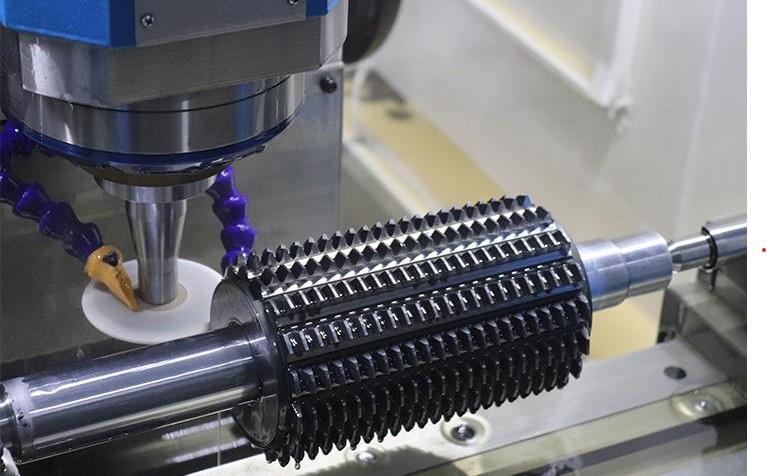
In today’s precision manufacturing industry, the quality of cutting tools directly impacts the performance of finished parts. Among these tools, gear hobs play a crucial role in producing high-precision gears used in the automotive, aerospace, industrial machinery, robotics, wind energy, and heavy engineering sectors. Although various manufacturing processes contribute to the quality of a gear hob, precision grinding is one of the most critical stages.
Grinding precision determines the gear hob’s geometry, cutting performance, durability, and consistency in quality. Even minute deviations during the grinding process can lead to poor gear quality, higher production costs, and reduced tool life. As industries increasingly demand higher precision (tighter tolerances) and greater productivity, precision grinding has become a key differentiator for gear hob manufacturers.
This article explores the importance of grinding precision in gear hob manufacturing, its impact on tool performance, and why advanced grinding technology is essential for modern gear production.
Understanding Gear Hob Manufacturing
A gear hob is a specialized cutting tool designed to manufacture gears through a continuous generating process known as gear hobbing. Unlike conventional cutting tools, gear hobs require extremely accurate tooth profiles to ensure gears are produced within specified tolerances.
The manufacturing process typically involves:
- Material selection
- Heat treatment
- CNC machining
- Precision grinding
- Surface finishing
- Quality inspection
- Coating (optional)
Among these stages, precision grinding is responsible for achieving the final cutting geometry and dimensional accuracy required for high-performance gear production.
What Is Precision Grinding?
Precision grinding is a highly controlled machining process that removes minute amounts of material using abrasive grinding wheels. In gear hob manufacturing, grinding is performed on CNC tool grinders capable of maintaining micron-level accuracy.
The process ensures:
- Correct tooth profile
- Accurate lead and helix angles
- Proper rake and relief angles
- Consistent pitch accuracy
- Superior surface finish
- Controlled concentricity
Modern CNC grinding machines can repeatedly achieve tolerances within just a few microns, making them indispensable in the production of premium gear cutting tools.
Why Grinding Precision Matters in Gear Hob Manufacturing
1. Ensures Accurate Gear Tooth Profiles
The primary function of a gear hob is to generate accurate gear teeth. Any variation in the hob’s cutting edges is directly transferred to the finished gear.
Precision grinding guarantees:
- Correct involute profiles
- Uniform tooth spacing
- Consistent pressure angles
- High dimensional accuracy
This minimizes gear noise, vibration, and transmission errors.
2. Improves Gear Quality
Poorly ground gear hobs can create defects such as:
- Uneven tooth spacing
- Profile inaccuracies
- Surface imperfections
- Poor meshing characteristics
High grinding precision enables manufacturers to produce gears with:
- Better load distribution
- Smooth operation
- Reduced friction
- Higher efficiency
- Longer service life
This is especially important for automotive transmissions, aerospace systems, and industrial gearboxes.
3. Increases Tool Life
Grinding precision affects cutting-edge geometry.
Properly ground cutting edges:
- Wear more evenly
- Resist chipping
- Maintain sharpness longer
- Reduce heat generation
- Improve chip evacuation
As a result, manufacturers experience longer tool life, fewer tool changes, and lower production costs.
4. Reduces Manufacturing Errors
Precision grinding minimizes common production issues, including:
- Tooth profile deviations
- Runout
- Pitch errors
- Helix inaccuracies
- Lead variations
Reducing these defects lowers scrap rates and decreases costly rework.
5. Supports High-Speed Machining
Modern manufacturing increasingly relies on high-speed gear cutting to improve productivity.
High-speed operations require gear hobs with:
- Perfect balance
- Uniform cutting edges
- Minimal vibration
- Excellent dimensional stability
Precision grinding ensures these characteristics are consistently achieved.
6. Enhances Surface Finish
Surface quality significantly impacts cutting performance.
Precision grinding produces:
- Smoother cutting surfaces
- Reduced friction
- Better chip flow
- Improved lubrication
- Lower cutting temperatures
A superior surface finish also improves the effectiveness of advanced coatings such as TiN, TiAlN, and AlCrN.
7. Maintains Tight Tolerances
Industries such as aerospace and electric vehicles require gear components manufactured within micron-level tolerances.
Precision grinding helps achieve:
- DIN standards
- AGMA quality requirements
- ISO gear specifications
- Customer-specific tolerances
Without accurate grinding, maintaining these standards would be nearly impossible.
CNC Grinding Technology in Modern Gear Hob Manufacturing
Today’s gear hob manufacturers utilize advanced CNC grinding systems equipped with:
- Multi-axis control
- Automatic wheel dressing
- Adaptive grinding technology
- In-process measurement
- Digital compensation systems
- High-speed spindles
These technologies improve repeatability while minimizing operator-dependent variations.
The Role of Grinding Wheel Selection
Grinding precision also depends on selecting the appropriate grinding wheel.
Factors include:
- Abrasive material
- Grain size
- Bond type
- Wheel hardness
- Dressing frequency
Manufacturers commonly use:
- CBN (Cubic Boron Nitride) wheels
- Diamond grinding wheels
- Ceramic-bonded abrasives
Choosing the right wheel helps maintain consistent accuracy throughout production.
Quality Control After Grinding
Precision grinding is followed by comprehensive inspection procedures.
Typical quality checks include:
- Profile measurement
- Pitch accuracy inspection
- Runout testing
- Surface roughness analysis
- Tooth spacing verification
- Coordinate Measuring Machine (CMM) inspection
Advanced metrology systems ensure every gear hob meets required specifications before delivery.
Benefits of Precision Grinding in Gear Hob Manufacturing
Manufacturers investing in precision grinding gain several advantages:
- Higher gear accuracy
- Improved production efficiency
- Longer tool life
- Reduced machine downtime
- Lower maintenance costs
- Better product consistency
- Reduced material waste
- Increased customer satisfaction
These benefits contribute to improved operational efficiency and stronger long-term profitability.
Industries That Depend on Precision Ground Gear Hobs
High-precision gear hobs are essential across a wide range of industries, including:
- Automotive manufacturing
- Electric vehicles (EVs)
- Aerospace engineering
- Wind energy
- Industrial automation
- Robotics
- Mining equipment
- Agricultural machinery
- Construction equipment
- Marine propulsion systems
Each sector relies on precise gear performance, making grinding accuracy a crucial aspect of manufacturing success.
Future Trends in Precision Grinding
The future of gear hob manufacturing is increasingly driven by digital technologies and automation. Emerging developments include:
- AI-assisted grinding optimization
- Machine learning for predictive maintenance
- Smart grinding systems with real-time monitoring
- Digital twin technology
- Automated inspection systems
- Industry 4.0 integration
These innovations are expected to further improve grinding precision, production efficiency, and product quality.
Best Practices for Maintaining Grinding Precision
Manufacturers can maintain consistently high grinding quality by:
- Regularly calibrating CNC grinding machines
- Using premium grinding wheels
- Monitoring wheel wear
- Maintaining coolant quality
- Conducting routine machine maintenance
- Implementing in-process inspections
- Training operators on precision grinding techniques
- Utilizing advanced metrology equipment
A disciplined approach helps ensure consistent tool performance and minimizes production variability.
Conclusion
Grinding precision is the foundation of high-quality gear hob manufacturing. From achieving accurate tooth geometry and extending tool life to improving gear performance and reducing production costs, precision grinding influences every stage of the manufacturing process. As industries continue to demand tighter tolerances, higher productivity, and superior reliability, investment in advanced grinding technology has become a strategic necessity rather than an option.
Manufacturers that prioritize precision grinding, advanced CNC equipment, rigorous quality control, and skilled engineering expertise are better positioned to deliver gear hobs that meet the evolving requirements of modern industries. Ultimately, precision grinding is not just about producing a cutting tool—it is about ensuring the consistent production of high-performance gears that power critical applications worldwide.
Frequently Asked Questions (FAQs)
Grinding precision ensures accurate tooth geometry, dimensional consistency, superior surface finish, and longer tool life, all of which directly affect the quality of manufactured gears.
Modern CNC grinding machines can achieve tolerances within a few microns, depending on the gear hob design and application.
Accurate grinding creates uniform cutting edges that wear evenly, reduce heat generation, and maintain sharpness for longer operating periods.
Automotive, aerospace, electric vehicles, robotics, industrial machinery, wind energy, mining, marine, and agricultural equipment manufacturers all rely on precision-ground gear hobs.