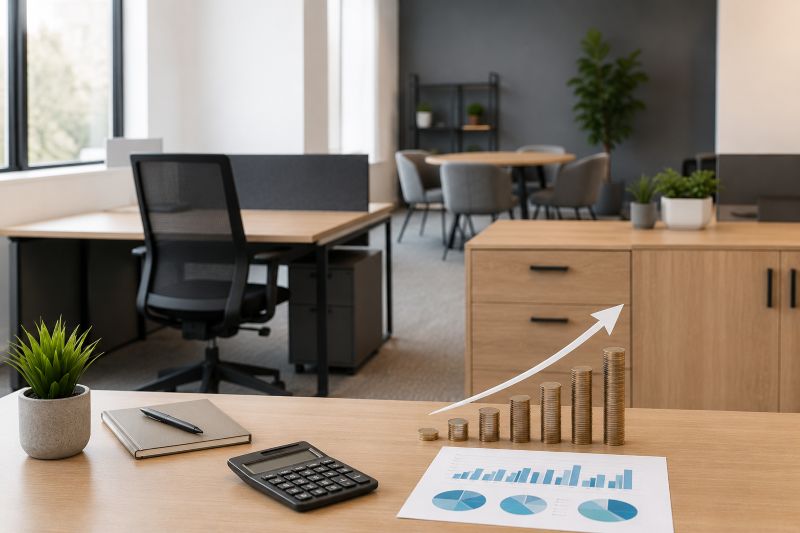
Growth is exciting, but it also brings new workplace challenges. As businesses add employees, expand departments, or move into larger facilities, office furniture quickly becomes a significant investment. Buying desks, chairs, storage solutions, conference tables, and collaborative workstations without a clear budget can lead to unnecessary expenses, inconsistent office design, and furniture that fails to meet future needs.
A well-planned furniture budget allows businesses to invest wisely while creating an efficient, comfortable, and professional workspace. Whether you’re expanding a startup, opening a satellite office, or renovating your headquarters, choosing the right modern office furniture in Lafayette Indiana can help maximize every dollar while supporting long-term business goals.
At Indoff Office Interiors, organizations of all sizes work with experienced professionals to develop furniture solutions that balance functionality, employee well-being, aesthetics, and financial responsibility.
Why Furniture Budgeting Matters During Business Growth
Many growing businesses focus heavily on technology, staffing, and operations while treating office furniture as an afterthought. However, furniture directly impacts productivity, employee satisfaction, company image, and operational efficiency.
Without a structured budget, companies often experience:
- Overspending on unnecessary furniture
- Purchasing mismatched products over time
- Running out of storage space
- Poor workstation ergonomics
- Increased replacement costs
- Difficulty adapting to future expansion
Strategic budgeting transforms furniture purchases from expenses into long-term business investments.
Start with a Workspace Assessment
Before assigning a budget, evaluate your current office environment.
Consider:
- Current employee count
- Expected hiring over the next 2–5 years
- Available floor space
- Remote and hybrid work schedules
- Department workflows
- Storage requirements
- Meeting room usage
This assessment prevents buying furniture that becomes obsolete after another growth phase.
Identify Existing Furniture That Can Be Reused
Many businesses already own quality furniture that simply needs updating or reconfiguration.
Examples include:
- Filing cabinets
- Conference tables
- Reception desks
- Storage cabinets
- Adjustable shelving
Combining existing assets with new furniture often reduces total project costs significantly.
Prioritize Furniture Based on Business Needs
Not every purchase needs to happen immediately.
Divide purchases into priorities.
Essential Items
These include furniture employees need every day.
Examples:
- Ergonomic office chairs
- Workstations
- Height-adjustable desks
- Computer tables
- Storage solutions
Secondary Investments
These improve functionality but may wait until later phases.
Examples include:
- Collaborative lounge seating
- Training room furniture
- Breakroom upgrades
- Decorative pieces
- Privacy booths
Prioritization keeps budgets manageable while supporting ongoing growth.
Plan for Scalability Instead of Immediate Capacity
One common budgeting mistake is purchasing furniture solely for current staffing levels.
Instead, consider scalable solutions.
Examples include:
- Modular workstations
- Expandable conference tables
- Mobile storage cabinets
- Stackable seating
- Flexible collaborative furniture
Scalable furniture allows businesses to expand without replacing entire office layouts.
Invest in Quality Where It Matters Most
Choosing the least expensive furniture often leads to higher replacement costs.
High-use items deserve higher-quality investments.
These include:
Office Chairs
Employees spend thousands of hours sitting each year.
Quality ergonomic seating helps reduce:
- Back pain
- Neck strain
- Fatigue
- Workers’ compensation risks
Desks
Durable desks withstand years of daily use while accommodating changing technology.
Storage Systems
Reliable cabinets and shelving prevent costly replacements and improve organization.
While affordable options exist, purchasing dependable commercial-grade furniture usually delivers better long-term value.
Build a Multi-Year Furniture Budget
Growing businesses rarely furnish an entire office in one purchase.
Instead, create phased investments.
Example:
Year One
- Reception area
- Employee workstations
- Manager offices
Year Two
- Conference rooms
- Training rooms
- Breakroom improvements
Year Three
- Collaboration spaces
- Executive upgrades
- Additional workstations
This approach spreads expenses while maintaining consistent office design.
Include Hidden Costs in Your Budget
Many businesses underestimate the complete cost of furnishing an office.
Budget for:
- Delivery
- Installation
- Assembly
- Space planning
- Design consultation
- Electrical access
- Furniture relocation
- Disposal of old furniture
Accounting for these expenses prevents budget surprises later.
Consider Employee Productivity as Part of ROI
Furniture should not be viewed solely as a purchase price.
Consider its return on investment.
Modern office furniture contributes to:
- Better posture
- Increased focus
- Reduced discomfort
- Improved collaboration
- Enhanced workplace morale
Comfortable employees are generally more productive, making ergonomic furniture a worthwhile investment.
Create Flexible Workspaces
Today’s workplaces continue evolving.
Hybrid schedules require adaptable office layouts.
Consider furniture that supports multiple work styles.
Collaborative Areas
Include:
- Shared tables
- Mobile whiteboards
- Lounge seating
- Flexible meeting spaces
Quiet Work Areas
Employees also benefit from spaces designed for concentration.
Privacy pods, acoustic panels, and individual workstations help reduce distractions.
Flexible furniture protects businesses from costly redesigns as workplace trends evolve.
Compare Total Ownership Costs Instead of Purchase Price
Budget-conscious companies sometimes select furniture based only on the lowest upfront cost.
Instead, compare:
- Warranty length
- Expected lifespan
- Maintenance requirements
- Replacement frequency
- Manufacturer support
- Reconfiguration options
Higher-quality furniture often costs less over ten years than repeatedly replacing inexpensive alternatives.
Work with Experienced Office Furniture Professionals
Professional furniture planning frequently saves businesses money.
Experienced consultants help with:
- Accurate space measurements
- Layout optimization
- Product selection
- Budget forecasting
- Installation coordination
- Future expansion planning
They also help avoid purchasing furniture that doesn’t fit the workspace or workflow.
For companies investing in modern office furniture in Lafayette Indiana, expert planning creates a smoother purchasing experience and better long-term value.
Balance Appearance with Practicality
Office aesthetics matter.
Clients, job candidates, and employees all notice workplace design.
However, visual appeal should complement functionality.
Choose furniture that offers:
- Durable materials
- Comfortable seating
- Easy maintenance
- Consistent finishes
- Timeless design
Neutral colors and adaptable layouts allow future updates without replacing entire furniture collections.
Take Advantage of Modular Office Systems
Modular furniture has become one of the smartest investments for expanding businesses.
Benefits include:
- Easier office reconfiguration
- Lower expansion costs
- Faster installation
- Improved space utilization
- Reduced waste
Instead of replacing complete workstations, businesses simply add or rearrange components.
This flexibility supports evolving organizational needs while protecting long-term budgets.
A Real-World Budgeting Example
Consider a regional accounting firm that expanded from 18 employees to 42 within three years.
Rather than purchasing furniture in one large project, leadership partnered with an office furniture specialist to develop a phased strategy.
The first phase focused on ergonomic workstations and shared storage. As the company hired additional staff, modular desks were added without redesigning the office. Conference spaces were upgraded during the second phase, followed by collaborative breakout areas in the third.
Because the company planned for growth from the beginning, it avoided replacing furniture, reduced installation disruptions, and maintained a consistent professional appearance throughout its expansion.
This practical approach demonstrates how thoughtful budgeting can support steady business growth while controlling long-term costs.
Sustainability Can Reduce Long-Term Expenses
Sustainable furniture choices benefit both budgets and environmental goals.
Many commercial furniture manufacturers now offer:
- Recyclable materials
- Long-lasting finishes
- Replaceable components
- Low-emission manufacturing
- Environmentally responsible production
Furniture built for durability typically remains in service much longer, reducing replacement frequency and lowering lifetime ownership costs.
Common Budgeting Mistakes to Avoid
Growing businesses often make avoidable mistakes that increase expenses.
These include:
- Buying residential instead of commercial furniture
- Ignoring future hiring plans
- Focusing only on purchase price
- Overlooking ergonomic needs
- Purchasing furniture before space planning
- Forgetting installation costs
- Choosing furniture without standardized finishes
- Failing to establish replacement schedules
Avoiding these mistakes creates a more efficient and financially responsible office furnishing strategy.
Why Strategic Furniture Planning Supports Business Success
Office furniture affects much more than appearance. It influences employee health, operational efficiency, collaboration, client impressions, and financial performance.
Companies that carefully budget for furniture create work environments capable of supporting continued expansion without unnecessary spending.
Partnering with knowledgeable professionals like Indoff Office Interiors gives growing organizations access to practical recommendations, scalable solutions, and industry-leading products that align with both immediate needs and long-term objectives.
When businesses invest thoughtfully in modern office furniture in Lafayette Indiana, they build workplaces designed to adapt, perform, and grow alongside their teams for years to come.