

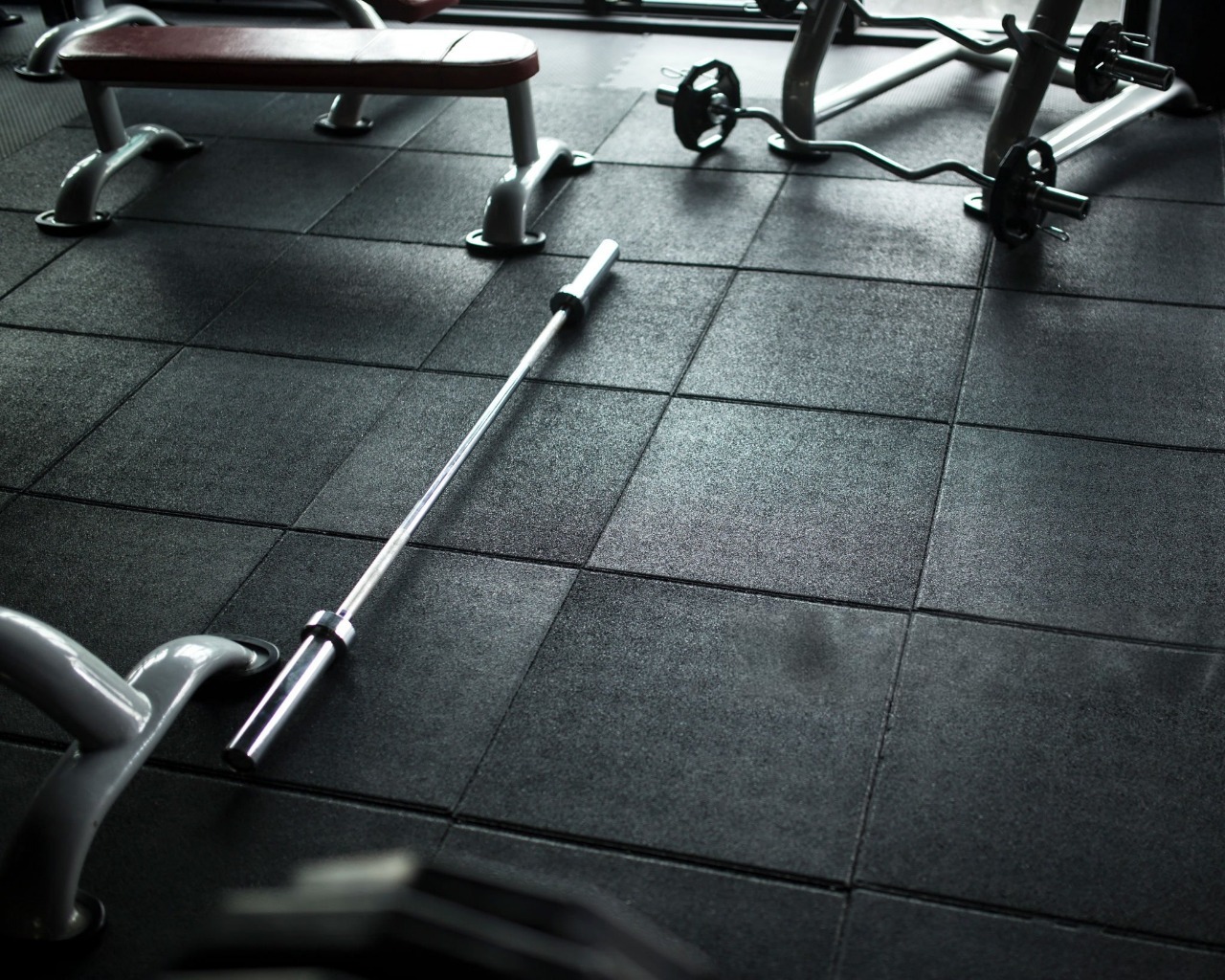
Renters face a problem that homeowners rarely think about. They need a training surface that protects the space and supports their lifts, but they cannot permanently alter a floor they do not own. A security deposit is on the line, and a lease usually forbids the permanent installation that glued-down rubber requires. This is exactly where a floating, puzzle-piece system earns its place. For anyone who moves often, trains in a leased space, or simply wants a setup that is not locked in place, interlocking gym flooring solves the core tension between protecting a floor and respecting a lease.
No Adhesive, No Damage
The defining advantage is that these tiles need no adhesive at all. They lay directly over an existing floor, connecting to each other rather than to the surface beneath. That means no glue residue, no drilled anchors, and no permanent marks on the landlord’s floor. When the lease ends, the system lifts as easily as it went down, leaving the original surface exactly as it was. For a renter, that reversibility is the difference between a deposit returned in full and a deduction for floor damage that never needed to happen.
Reconfigure and Expand on Demand
Life in a rental changes. Equipment comes and goes, room layouts shift, and the training area you set up this year may not fit the apartment you move to next. A floating tile system flexes with all of that. Need to expand the platform for a new rack? Add tiles. Downsizing to a smaller room? Pull some up and store them. Because interlocking rubber tiles connect, you can reshape the footprint as often as your space or your training demands, without buying an entirely new floor each time.
Portability That Travels With You
The most underrated benefit shows up on moving day. A floating system of interlocking rubber tiles disassembles into a stack of manageable pieces that go in the truck alongside the rest of your gear. You are not abandoning an expensive floor or scraping glued rubber off a slab when you leave. The same floor that protected one apartment protects the next, which spreads the cost across years rather than a single lease. For renters who expect to move more than once, that portability turns flooring from a recurring expense into a one-time investment that follows them.
Cutting Tiles to Fit Real Spaces
Rental rooms are rarely perfect rectangles. Closets jut in, baseboards run uneven, and equipment needs to sit flush against a wall. The good news is that these tiles are cut cleanly with a sharp utility knife and a straightedge. Trimming edge pieces to fit around door frames, columns, and racks is straightforward, and because the cut edge usually sits against a wall, precision matters less than it would mid-floor. A quick approach to fitting a room:
- Lay full tiles from the center outward first.
- Measure the gap at each wall once the full tiles are down.
- Score and snap the edge tiles to fill the remaining space.
- Save offcuts, since they often fit the opposite wall.
Thickness Still Matters in a Temporary Setup
Choosing a floating system does not mean ignoring the fundamentals. The right thickness still depends on how you train. A setup for machines and light cardio is fine on a thinner tile, while moderate barbell work calls for 1/2 inch and heavy lifting with dropped loads justifies 3/4 inch. The portability of interlocking gym flooring is only an advantage if the tiles you choose are also thick enough to protect both the rental floor and your joints under the loads you actually move.
The Bottom Line for Renters
A temporary living situation does not mean settling for an inferior training surface. A floating tile system gives renters the protection, the cushioning, and the professional look of a permanent floor, with none of the commitment a lease forbids. It installs without damage, reshapes on demand and trims to fit awkward and uneven rental spaces.
A temporary address is no reason to settle for a worse training surface. A floating tile system delivers the protection, cushioning, and professional look of a permanent floor with none of the commitment a lease forbids, and it picks up and moves whenever you do. For anyone who rents their home, it is the format that makes the most sense.

