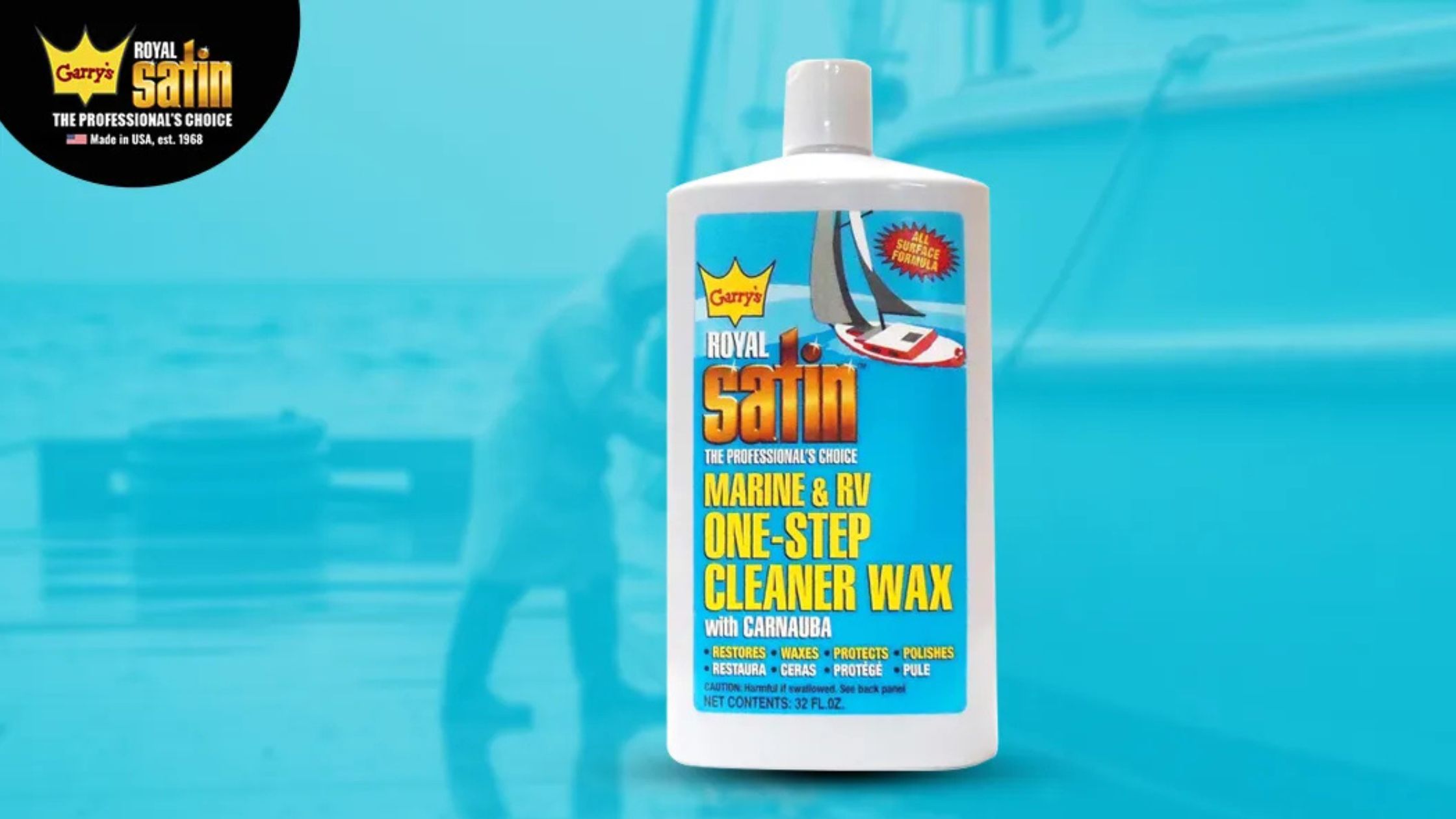
A boat does not lose its shine overnight. The process is gradual, almost invisible at first. What begins as a slight dullness slowly turns into a flat, chalky surface that no amount of regular washing can fix. This transformation is oxidation, and reversing it requires more than surface-level cleaning. It calls for a targeted approach using a high-performance oxidation cleaner for boats that understands the structure of marine finishes.
Garry’s Royal Satin redefines this process by treating oxidation not as a cosmetic flaw but as a surface condition that can be corrected, refined, and protected in one controlled step.
The Science Behind Surface Breakdown
Boat surfaces are constantly interacting with environmental stress. UV radiation breaks down surface binders, salt crystals create abrasion, and moisture accelerates chemical reactions. The result is a degraded outer layer that scatters light instead of reflecting it.
This is why oxidized boats appear dull rather than glossy. The surface is no longer smooth at a microscopic level.
A well-engineered oxidation cleaner for boats does more than just clean. It corrects this uneven layer by refining the surface until it can reflect light properly again.
Why Most Cleaning Methods Fail
Many boat owners rely on standard soaps or aggressive polishing compounds. Both approaches have limitations.
- Soaps remove dirt but leave oxidation untouched
- Heavy compounds remove oxidation but risk damaging the surface
- Multi-step systems are time-consuming and inconsistent
The gap lies in finding a solution that removes oxidation while maintaining control over how much surface is being corrected.
The Layer Removal Approach Explained
Think of oxidation as a thin, damaged film sitting on top of a healthy layer. The goal is not to strip everything away but to remove only what is necessary.
Garry’s Royal Satin uses a balanced formulation that works at this precise level. It targets the compromised layer while preserving the integrity beneath.
This controlled removal is what separates effective restoration from over-correction.
Micro Restoration vs Heavy Compounding
Traditional methods rely on aggressive abrasion to eliminate oxidation. While this can work, it often creates uneven finishes and requires follow-up polishing.
Micro restoration takes a different path. Instead of force, it uses refinement.
Key differences
- Heavy compounding removes material quickly but lacks precision
- Micro-restoration works gradually for a uniform finish
- Less risk of swirl marks or surface thinning
- Better suited for repeated maintenance cycles
Garry’s Royal Satin is built around this micro restoration principle, making it ideal for both initial correction and ongoing care.
Where Garry’s Royal Satin Changes the Game
Most products treat cleaning and finishing as separate steps. This increases effort and introduces variability in results.
Garry’s Royal Satin integrates these steps into a single process.
- Cleans oxidation at the source
- Smooths the surface simultaneously
- Enhances reflectivity without additional polishing
- Leaves behind a refined, even finish
This unified approach ensures that every pass contributes to both correction and enhancement.
Real World Use Case Scenarios
- Sun-Faded Hulls
Boats exposed to prolonged sunlight often develop uneven fading. A targeted oxidation cleaner for boats restores consistency across the surface, bringing back depth and color balance.
- Saltwater Exposure
Salt accelerates oxidation by creating micro abrasions. Garry’s Royal Satin helps neutralize this effect by smoothing the surface while removing residue.
- Stored but Neglected Boats
Even boats kept in storage can oxidize due to trapped moisture. A one-step cleaner simplifies restoration without requiring extensive prep work.
- Routine Upkeep
For boats that are already in excellent condition, periodic use prevents oxidation from taking hold in the first place.
Performance Comparison Table
| Approach | Surface Control | Finish Quality | Effort Level | Consistency |
| Basic Cleaning | Low | Dull | Low | High |
| Aggressive Compounding | Medium | Variable | High | Low |
| Multi-Step Detailing | High | High | Very High | Medium |
| Garry’s Royal Satin Method | High | High | Low | High |
This highlights a shift toward smarter, more efficient restoration methods.
Maintenance Rhythm That Prevents Re-oxidation
Restoration is only part of the equation. Preventing oxidation from returning requires a consistent rhythm rather than occasional deep cleaning.
- Light maintenance after every few uses
- Immediate attention to dull spots
- Even application across all exposed surfaces
- Avoiding long gaps between treatments
Using a dependable oxidation cleaner for a boat as part of this rhythm ensures that oxidation never progresses beyond a manageable stage.
A Smarter Way to Restore Marine Surfaces
Boat care is evolving. The focus is no longer on aggressive correction but on controlled, repeatable results that maintain surface quality over time.
Garry’s Royal Satin reflects this shift by offering a solution that aligns with how modern boat owners approach maintenance. It prioritizes efficiency without compromising on finish quality, making it suitable for both experienced users and those looking for a simplified process.
Wrapping Up
A boat should reflect the care invested in it. Oxidation can diminish that reflection, but it does not define the surface permanently. With the right approach, restoration becomes predictable and maintenance becomes easier.
Garry’s Royal Satin delivers a refined solution that transforms how oxidation is handled. For those ready to move beyond basic cleaning and into true surface restoration, choosing a high-performance oxidation remover for boats is the next logical step.
Also, available on the website — Garry Royal Satin and Amazon