In recent years, the UK’s road to decarbonisation has accelerated dramatically. From ambitious net-zero targets to evolving transport policies, British drivers and fleet operators are constantly evaluating greener alternatives to traditional fossil fuels. One of the emerging contenders is HVO fuel — Hydrotreated Vegetable Oil. But with all the buzz, a key question remains: Is HVO fuel actually worth it?
In this article, we’ll offer a balanced, practical and UK-focused assessment drawn from industry experience, real-world insights, and environmental context. By the end, you’ll understand not just what HVO is, but whether it makes sense for your vehicle, business, or sustainability goals.
What Is HVO Fuel?
At its core, HVO (Hydrotreated Vegetable Oil) is a type of renewable diesel. Unlike biodiesel (FAME), which is typically blended into regular diesel, HVO is a fully paraffinic fuel produced by hydrotreating sustainable feedstocks such as used cooking oil, animal fats or plant-based oils.
The result is a drop-in replacement for diesel: it has similar chemical properties, burns cleaner, and can be used in many diesel engines without modifications.
This “plug-and-play” promise is a major selling point for fleets, hauliers and even everyday motorists considering greener alternatives.
How HVO Stands Out in the UK Market
The UK has been a pioneer in renewable fuel adoption. With government incentives, environmental policies and public demand for sustainability rising, HVO fuel has rapidly gained attention.
Unlike pure electric transitions — which require charging infrastructure, new vehicles and higher upfront costs — HVO offers environmental benefit with minimal behavioural change. You fill up at a pump, just like petrol or diesel.
However, like all energy transitions, the picture is more complex once you dig deeper.
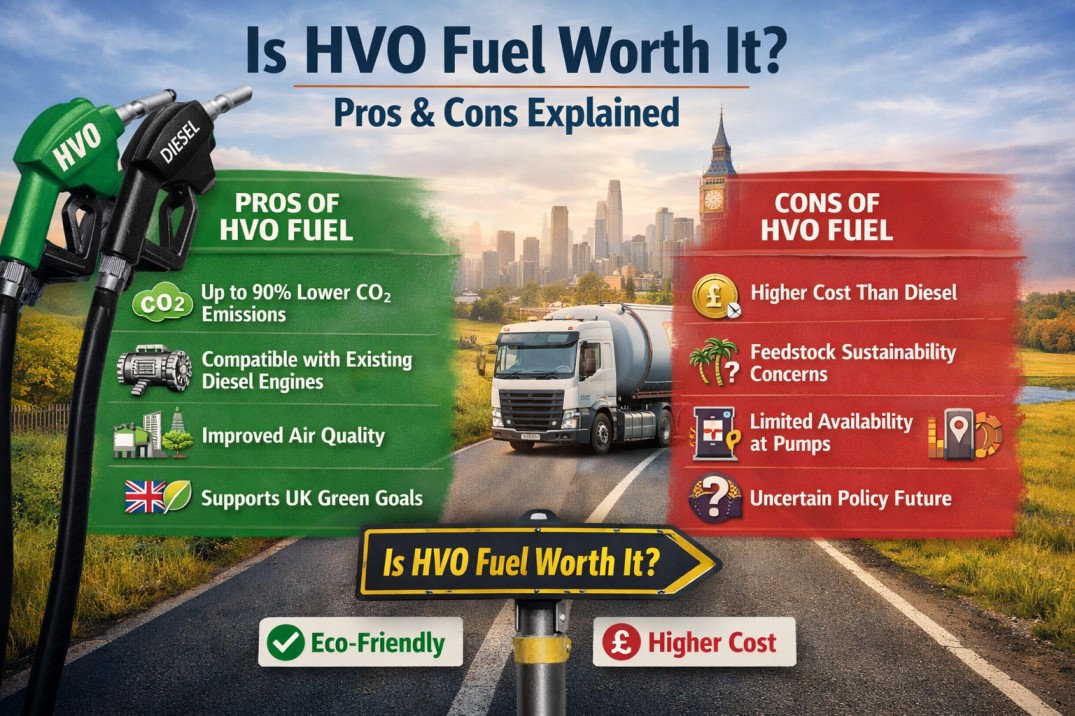
Pros of HVO Fuel
1. Substantial Emissions Reductions
One of HVO’s biggest advantages is its carbon credentials.
Depending on the feedstocks and production pathway, HVO can cut lifecycle greenhouse gas (GHG) emissions by up to 90% compared to conventional diesel.
This considers everything from feedstock cultivation or collection, processing, transport and combustion. For UK fleets reporting sustainability metrics, this is a massive advantage.
2. Compatibility With Existing Engines
Unlike some alternative fuels that require engine modifications or separate infrastructure, HVO can be used in many diesel engines without changes.
This makes it especially attractive for:
- Commercial fleets
- Agricultural machinery
- Emergency services
- Construction equipment
- Long-haul trucks
- Older diesel vehicles
3. Improved Air Quality
HVO burns cleaner than fossil diesel. Users typically see reductions in:
- Particulate matter (PM)
- Nitrogen oxides (NOx)
- Soot and other pollutants
For urban centres like London, Manchester, and Birmingham — where air quality regulations are stringent — this can mean fewer fines, cleaner certificates and better workplace safety around diesel equipment.
4. Immediate Environmental Impact
Switching to HVO doesn’t require a waiting period. You can adopt it now and start reducing emissions immediately — essential for businesses under pressure to show progress against climate commitments.
5. Potential Support With UK Policy Trends
Policies such as the Renewable Transport Fuel Obligation (RTFO) and future low-carbon fuel standards could reward use of renewable fuels like HVO. This might translate into financial incentives or credits for early adopters.
Cons of HVO Fuel
1. Price Premium Over Diesel
One of the biggest drawbacks is cost. HVO typically sells at a premium compared to regular diesel. That’s because production is more expensive and the supply chain is still developing.
For many UK drivers and fleet operators, this translates into higher operating costs — at least in the short term.
2. Feedstock and Sustainability Concerns
Not all HVO is created equal. The environmental benefit depends heavily on the feedstocks used.
While used cooking oil or waste fats provide excellent lifecycle savings, some suppliers may use palm oil or other crops associated with deforestation. This has raised questions about true sustainability — particularly in markets striving for ethical green credentials.
Therefore, buyers in the UK must ask suppliers about feedstock sources and certification to ensure genuine emissions savings.
3. Limited Availability at UK Pumps
Although HVO is expanding, it’s still not widely stocked at every petrol station. In rural areas or smaller towns, access can be limited.
For fleets operating nationally, this means route planning to ensure availability — similar to early electric vehicle charging challenges.
4. Uncertain Long-Term Policy Landscape
While the political wind in the UK currently favors decarbonisation, energy policy can shift with economic pressures. Incentives, taxes and regulatory support can change, affecting the long-term economics of HVO use.
5. Not a Silver Bullet for Decarbonisation
HVO is cleaner than diesel, but it is still a combustion fuel. It doesn’t eliminate emissions entirely. For heavy-duty vehicles, it’s an intermediate step — useful today, but potentially superseded by hydrogen, renewable electricity or other breakthroughs tomorrow.
Key Considerations Before Switching
If you’re thinking about adopting HVO fuel, here are practical questions to evaluate:
1. What Are Your Sustainability Goals?
If your business has strict carbon reduction targets, HVO could deliver measurable progress.
2. What’s Your Operational Footprint?
Fleets operating mainly within clean air zones or cities may benefit more due to improved air quality and public perception.
3. Can You Absorb the Cost?
Calculate total cost of ownership with and without HVO. Factor in tax incentives, potential fuel grants, and carbon reporting benefits.
4. Who’s Your Supplier?
Ensure feedstock transparency. Ask for sustainability certifications and lifecycle analysis documentation.
5. What’s the Fuel Infrastructure Like in Your Region?
If access is limited, can you arrange dedicated supply or bulk delivery?
Final Verdict: Is HVO Fuel Worth It in the UK?
Yes — but with conditions.
Hydrotreated Vegetable Oil fuel offers significant environmental advantages, cleaner combustion, and a seamless transition for diesel users. For many fleets and responsible businesses in the UK, it’s a practical stepping stone toward net-zero goals without breaking operations or requiring engine changes.
However, cost, feedstock sustainability and limited availability remain real challenges. HVO isn’t a one-size-fits-all solution, and it shouldn’t overshadow other long-term strategies like electrification or hydrogen adoption.
Ultimately, HVO fuel is worth considering — especially for organisations seeking impactful, immediate emissions reductions and willing to navigate cost and supply considerations.
If you’re in the UK and evaluating your fuel strategy for 2026 and beyond, HVO deserves a prominent place in that conversation.