

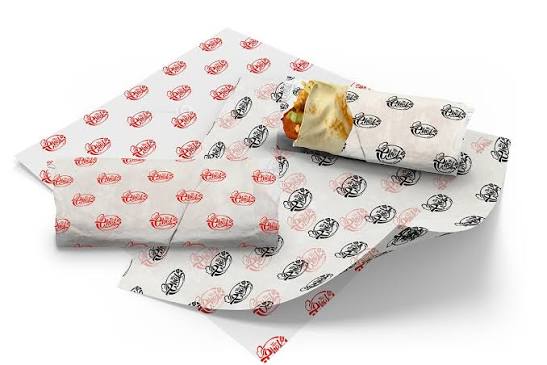
Wax paper and greaseproof paper are often confused because they can look similar and are both used for food packaging. However, they are made differently and can perform better in different situations. Understanding these differences can help bakeries, restaurants, cafés, and food businesses choose the right paper for their products.
The main difference comes from how each paper creates its protective barrier. Wax paper uses a wax coating to provide resistance against moisture and grease, while greaseproof paper generally relies on a dense paper structure to resist oil penetration.
What Is Wax Paper?
Wax paper is paper coated with a thin layer of wax. The coating creates a smooth surface that helps resist moisture and provides useful non-stick properties for certain food preparation and storage applications.
For businesses that want branding on their food packaging, custom printed wax paper can combine the functional properties of waxed paper with logos, patterns, colors, and other brand elements. Printing specifications should be selected according to the particular wax coating and food-contact requirements.
Wax paper is commonly used for wrapping or separating foods, particularly in applications where moisture resistance is useful. It can work well for cold or room-temperature foods, but standard wax paper should not be treated as an oven-safe baking paper because the wax coating can soften or melt when exposed to high temperatures.
What Is Greaseproof Paper?
Greaseproof paper is designed to resist the penetration of oils and fats. Its grease resistance generally comes from a dense fiber structure rather than a conventional wax coating. This makes it particularly useful for food-service applications involving oily or greasy products.
It is commonly used for food wrapping, tray liners, takeaway packaging, bakery products, sandwiches, burgers, and fried foods. The exact performance depends on the grade and construction, so businesses should check the supplier’s specifications for their intended application.
How Are They Different?
Although both materials can help protect food from grease, their barrier systems are different. Wax paper depends on its surface coating, while greaseproof paper gets much of its resistance from the structure of the paper itself.
This difference affects where each material should be used. Wax paper can be useful when moisture resistance and a smooth, non-stick surface are important, while greaseproof paper can be a practical option for food-service applications where grease resistance and handling performance are priorities.
Grease Resistance
Greaseproof paper is specifically designed to resist oil and grease, making it suitable for many takeaway and food-wrapping applications. Its dense fiber structure helps reduce the movement of grease through the sheet.
Wax paper can also resist grease because of its wax coating, but its performance depends on the type and amount of wax used. Businesses should consider the food’s oil content, temperature, contact time, and moisture level before selecting a paper.
Moisture Resistance
Wax paper generally provides stronger moisture resistance because the wax coating creates a barrier against water and liquids. This makes it useful for certain cold-food wrapping and storage applications.
Greaseproof paper can provide grease resistance while allowing more breathability than a wax-coated material. This can be useful for some hot food applications where releasing steam is important.
Heat and Oven Use
Heat is one of the most important differences to consider. Standard wax paper is generally not intended for oven use because its wax coating can soften or melt at elevated temperatures.
Greaseproof paper can be more suitable for certain hot-food applications, but that does not mean every greaseproof paper is automatically oven-safe. Heat performance depends on the specific paper grade and construction, so businesses should follow the manufacturer’s temperature recommendations.
Which Paper Is Better for Food Packaging?
There is no single option that works best for every food product. The right choice depends on what the packaging needs to do.
Greaseproof paper can be useful for burgers, sandwiches, fried foods, bakery products, food baskets, and takeaway applications where oil resistance is important. Wax paper can be useful for cold foods, food separation, and applications where moisture resistance and a smooth surface are desired.
Greaseproof Paper for Businesses
Food businesses in New Zealand may need packaging that matches different food-service applications, from bakery products to takeaway meals. When selecting greaseproof paper New Zealand suppliers or products, businesses should consider paper weight, grease resistance, printing requirements, food-contact suitability, and the intended food application.
Custom printing can also help Canadian restaurants, bakeries, cafés, and food brands create more recognizable packaging without changing the basic function of the paper.
Custom Printing Options
Both wax paper and greaseproof paper can be customized with suitable printing processes. Businesses can add logos, brand names, repeating patterns, illustrations, or other visual elements to their food paper.
The printing process should be compatible with the paper surface. Wax-coated paper may require appropriate ink and adhesion considerations, while greaseproof paper can also require testing to ensure the printed design maintains its appearance during handling and food contact.
Choosing the Right Paper
Before ordering either paper type, consider the food being packaged and how the paper will be used. Temperature, grease, moisture, storage conditions, contact time, and required presentation can all affect the choice.
Businesses should also check whether the paper is intended for direct food contact and whether the finished product meets the applicable requirements for its target market.
Frequently Asked Questions
Is wax paper the same as greaseproof paper?
No. Wax paper has a wax coating, while greaseproof paper generally achieves grease resistance through its dense paper structure. Their applications and heat performance can therefore differ.
Which is better for greasy food?
Greaseproof paper is commonly used for greasy and oily foods because it is specifically designed to resist grease penetration. The exact performance depends on the paper grade and food conditions.
Can wax paper go in the oven?
Standard wax paper should not be used in the oven because its wax coating can soften or melt at high temperatures. Always follow the product manufacturer’s instructions.
Can greaseproof paper be custom printed?
Yes. Suitable greaseproof paper can be custom printed with logos, patterns, colors, and other branding elements, depending on the paper and printing process.
Can wax paper be custom printed?
Yes. Wax paper can be printed when the coating and printing method are compatible. Businesses should confirm print adhesion and food-contact requirements with their supplier.
Conclusion
Wax paper and greaseproof paper may look similar, but their construction and performance are different. Wax paper relies on a wax coating for moisture resistance and a smooth surface, while greaseproof paper generally uses a dense fiber structure to resist grease.
For food businesses, the best option depends on the product, temperature, grease level, moisture requirements, and intended use. Choosing the correct paper specification can improve food presentation while helping packaging perform properly during handling and service.
