

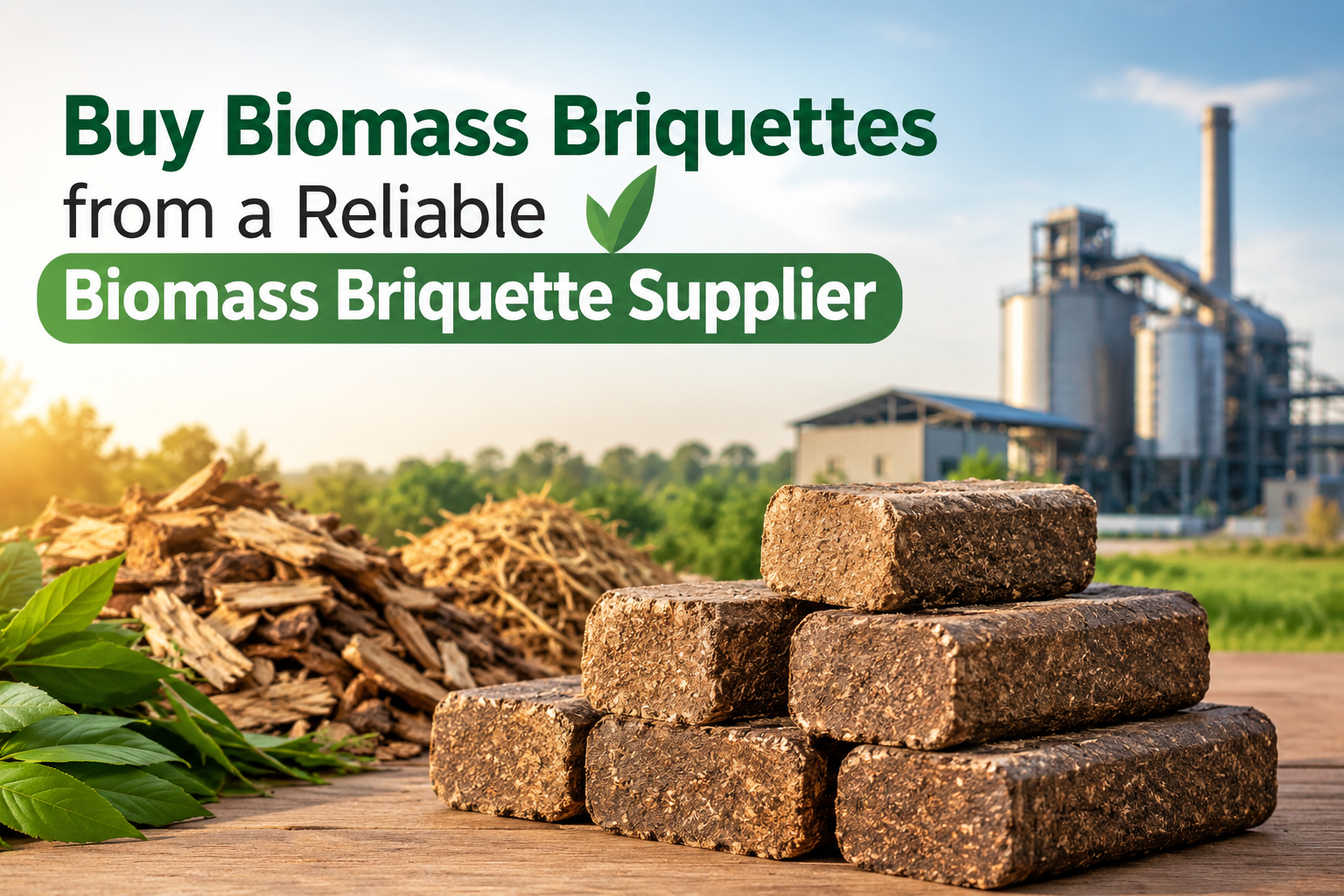
Industries that require regular thermal energy are increasingly exploring alternative solid fuels that can support their operational needs while making better use of renewable resources. Biomass briquettes are one such option, produced by compressing suitable agricultural, wood, and plant-based residues into a dense and convenient fuel form. For businesses planning to purchase these fuels, finding a dependable Biomass Briquette Supplier is an important step toward maintaining consistent quality and supply.
Buying biomass briquettes is not simply about finding the lowest price per tonne. Product quality, raw materials, moisture, ash content, calorific value, production capacity, transportation, and delivery schedules can all influence the overall value of a purchase. A careful approach allows industrial buyers to compare suppliers based on their actual requirements.
What Are Biomass Briquettes?
Biomass briquettes are compressed blocks or logs made from suitable biomass materials. Depending on the manufacturing process, the raw materials may include agricultural residues, sawdust, wood waste, crop residues, and other plant-based materials.
Loose biomass materials can have relatively low bulk density, which may make transportation, storage, and feeding more challenging. Briquetting compresses these materials into a denser form, making them easier to handle and transport.
The characteristics of biomass briquettes depend on the feedstock and manufacturing process. Factors such as moisture content, density, ash level, size, and calorific value can vary. This is why buyers should understand the specifications of the product they are purchasing before placing a large order.
Why Are Businesses Buying Biomass Briquettes?
The growing interest in biomass fuel is partly connected with the availability of agricultural and wood residues. Instead of leaving suitable biomass materials underutilized, these residues can be processed into useful solid fuel.
For industries with compatible heating equipment, briquettes can be considered for applications such as:
- Industrial boilers
- Furnaces
- Brick kilns
- Drying systems
- Process heating
- Manufacturing units
- Food-processing facilities
- Other thermal applications
The suitability of briquettes depends on the equipment and operating conditions. Businesses should therefore check their boiler or furnace requirements before selecting a particular fuel specification.
What to Check Before Buying Biomass Briquettes
Before purchasing biomass briquettes, buyers should evaluate several product and supplier factors. This becomes particularly important when the requirement involves regular or bulk supply.
1. Raw Material Used
The type of biomass used in production can influence fuel characteristics. Buyers should ask whether the briquettes are manufactured from agricultural residues, wood-based materials, or a combination of suitable biomass feedstocks.
Understanding the source of the raw material provides useful information about the product and its expected characteristics.
2. Moisture Content
Moisture is an important factor in biomass fuel quality. Excess moisture can affect combustion because some of the available energy is used to evaporate water during burning.
Buyers should request product specifications and compare the moisture level with their equipment requirements. Proper storage is also important because exposure to moisture can affect the physical condition of briquettes.
3. Ash Content
Ash refers to the residue remaining after combustion. The amount of ash generated can influence cleaning and maintenance requirements.
Different industrial applications may have different acceptable ash levels. Therefore, buyers should consider ash specifications alongside other fuel characteristics instead of treating them as an isolated factor.
4. Calorific Value
Calorific value represents the amount of energy that can be released from a given quantity of fuel. It is useful when comparing biomass briquettes with other solid fuels.
A higher calorific value does not automatically mean a product is suitable for every application. Buyers should consider the complete set of specifications and match the fuel with their equipment.
5. Briquette Size and Density
Briquette dimensions and density can influence storage, handling, feeding, and combustion. Some systems may be designed for particular fuel sizes.
Before placing an order, businesses should confirm that the briquette dimensions are compatible with their existing handling and combustion systems.
Choosing the Right Biomass Briquette Supplier
When buying biomass fuel for regular industrial use, supplier reliability is just as important as product specifications. A Biomass Briquette Supplier should be able to clearly communicate production capacity, product specifications, order quantities, and delivery arrangements.
For a small trial purchase, the requirements may be relatively simple. However, businesses purchasing several tonnes regularly need a supplier capable of maintaining consistent production and dependable logistics.
Buyers can ask potential suppliers about:
- Monthly production capacity
- Minimum order quantity
- Product specifications
- Raw material sources
- Packaging options
- Transportation arrangements
- Delivery schedules
- Bulk order capabilities
- Regular supply options
Getting these details in advance can make supplier comparison easier and reduce uncertainty when planning future purchases.
Bulk Biomass Briquette Purchase
Businesses with high fuel consumption may prefer bulk biomass briquette purchasing to support regular operations. However, bulk orders should be planned around actual consumption and available storage capacity.
Before placing a large order, calculate approximate monthly fuel usage. This helps determine the required delivery frequency and storage level.
For example, an industrial facility that consumes biomass fuel continuously may need scheduled deliveries rather than occasional shipments. A well-planned supply arrangement can help prevent unexpected shortages while avoiding unnecessary stock accumulation.
Transportation should also be included when calculating the overall purchase cost. A supplier located farther away may have a different delivered cost than a nearby supplier, even when the initial product price appears competitive.
Comparing Biomass Briquette Prices
Price is naturally an important consideration when buying biomass briquettes, but it should not be the only deciding factor.
A low-cost product may have different moisture, ash, density, or calorific characteristics compared with another product. Similarly, transportation charges can significantly affect the final delivered price.
Instead of comparing only the price per tonne, businesses can consider the overall cost of using the fuel. This may include:
- Purchase price
- Transportation
- Storage
- Handling
- Fuel consumption
- Ash management
- Equipment maintenance
This broader approach gives buyers a better understanding of the practical value of different biomass fuel options.
Quality and Consistency in Regular Supply
Consistent fuel quality can make biomass fuel management easier for industrial users. Significant changes in fuel characteristics between deliveries may affect combustion and operational planning.
This is why businesses establishing long-term supply arrangements should discuss quality expectations with their supplier. Regular communication about specifications, order quantities, and delivery schedules can support a more predictable procurement process.
Ecostan Biofuel focuses on biomass fuel solutions using agricultural, wood, and other suitable plant residues. The company manufactures biomass briquettes and pellets for industrial applications, providing businesses with renewable solid-fuel options for suitable heating systems.
Environmental Value of Biomass Briquettes
Biomass briquettes are made from renewable organic materials such as agricultural and wood residues. Processing these materials into compact fuel can provide a productive use for suitable biomass waste.
For businesses exploring alternative fuel sources, biomass briquettes can form part of a broader strategy focused on renewable resource utilization. The actual environmental benefits depend on factors such as feedstock sourcing, transportation, production methods, and how the fuel is used.
Responsible biomass sourcing and efficient manufacturing are therefore important considerations when evaluating biomass fuel solutions.
Applications Across Different Industries
Biomass briquettes can be used in a variety of thermal applications where the fuel is compatible with the combustion system.
Industrial users may consider briquettes for boilers, furnaces, brick kilns, dryers, and other heating equipment. Industries such as manufacturing, food processing, textiles, and other thermal-process businesses may explore biomass briquettes depending on their specific energy requirements.
Before purchasing, businesses should confirm the technical requirements of their equipment and determine whether the proposed briquette specifications are suitable.
How to Place a Biomass Briquette Order
Once a suitable supplier has been identified, buyers should provide clear information about their requirements. This can include the quantity needed, delivery location, application, preferred briquette specifications, and expected order frequency.
A supplier can then provide relevant product and commercial information. For first-time buyers, requesting product specifications or a sample where appropriate can help with initial evaluation.
Businesses planning regular purchases should also discuss future demand rather than treating each order separately. This can help establish a more predictable supply arrangement.
Why Supplier Communication Matters
Good communication can simplify the entire purchasing process. Buyers should be able to ask questions about product specifications, availability, transportation, and delivery schedules.
A reliable supplier should also be transparent about its production capabilities and the type of biomass materials used.
Ecostan Biofuel supports industrial buyers looking for biomass fuel solutions and can help businesses explore suitable briquette and pellet options according to their requirements.
Conclusion
Buying biomass briquettes requires careful consideration of quality, price, fuel specifications, supply capacity, and delivery reliability. Businesses should compare suppliers based on their complete requirements rather than focusing only on the lowest quotation.
Choosing a dependable Biomass Briquette Supplier can help industries plan their fuel purchases more effectively and maintain a consistent supply for compatible boilers, furnaces, and heating systems. Ecostan Biofuel provides biomass briquette and pellet solutions for industrial fuel requirements, helping businesses explore suitable renewable solid-fuel options based on their applications and supply needs.
