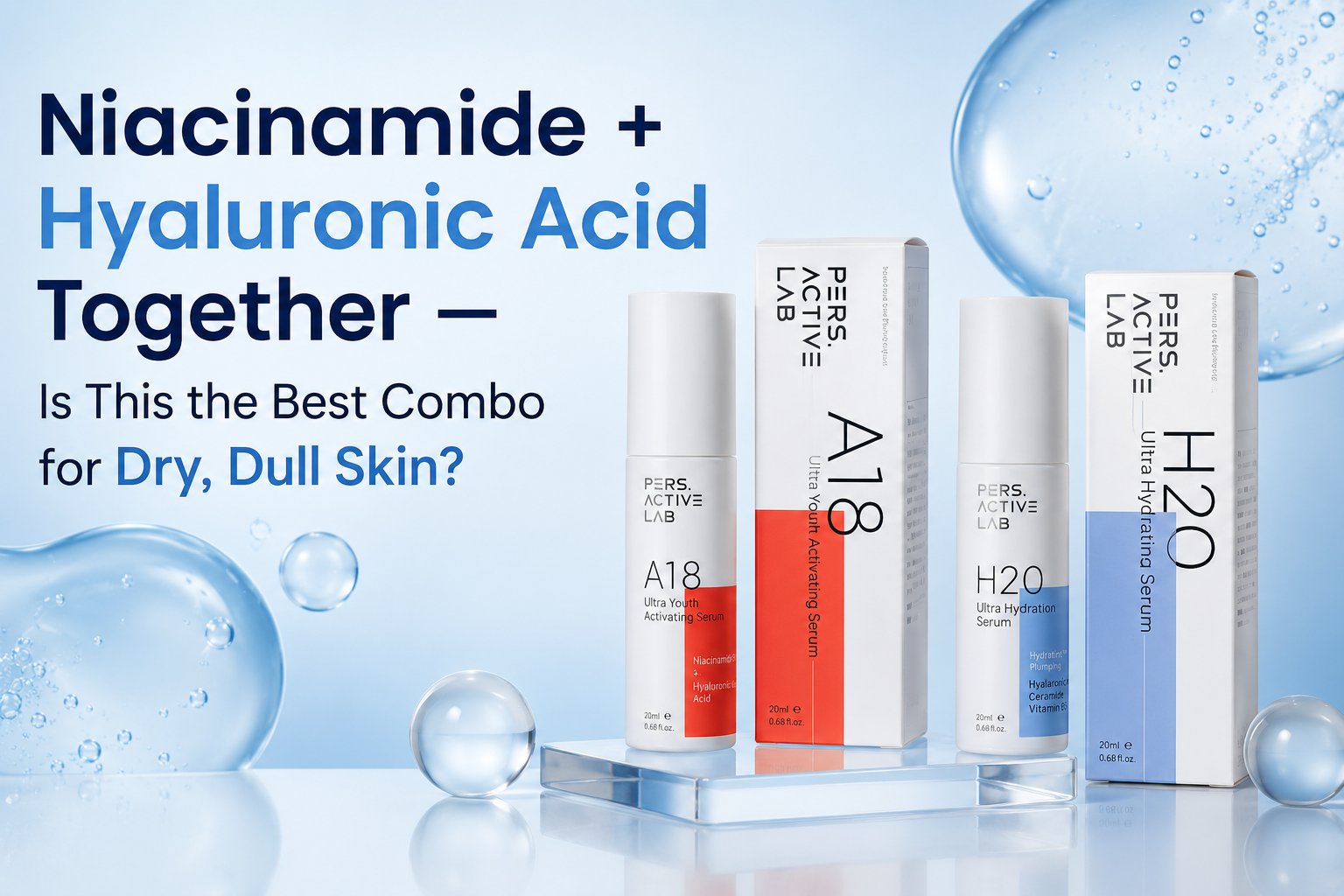
If your skin feels persistently tight, flaky, or looks lifeless no matter how many products you layer on, you are not alone. Millions of people struggle with dry, dull skin that refuses to respond to basic moisturizers. The answer often lies not in using more products but in using the right ingredients together. Niacinamide and Hyaluronic Acid have individually earned strong reputations in the skincare world. But when paired together, they do something remarkable. They address dryness and dullness from two different angles at the same time, delivering results that neither ingredient achieves on its own.
So, is this the best combo for dry, dull skin? Let’s break it down.
What Is Hyaluronic Acid and Why Does Dry Skin Need It?
Hyaluronic Acid (HA) is a naturally occurring molecule in the human body. It holds up to 1,000 times its weight in water. When skin loses this molecule due to aging, sun exposure, pollution, or a weakened barrier, it becomes dry, rough, and prone to fine lines.
A hyaluronic acid serum for dry skin works by pulling moisture from the environment into the deeper layers of the skin. Unlike creams that sit on top of the skin surface, a well-formulated serum penetrates quickly and delivers hydration where your skin actually needs it at the cellular level. This is the key difference. Moisturizers lock in surface hydration. Serums go deeper and actively restore it.
When your skin lacks adequate hydration, it triggers a chain reaction. The skin barrier weakens, which allows more moisture to escape and that cycle keeps repeating until something breaks it. A targeted serum with the right ingredients interrupts that cycle effectively.
What Does Niacinamide Do for Dry and Dull Skin?
Niacinamide, also known as Vitamin B3, is one of the most research-backed ingredients in skincare today. It works on multiple skin concerns at the same time without irritating which makes it ideal for people with sensitive or reactive dry skin.
Here is what Niacinamide does when applied regularly:
- It strengthens the skin barrier. Niacinamide boosts the production of ceramides, which are the building blocks of a healthy skin barrier. A stronger barrier holds moisture in and keeps irritants out.
- It reduces dullness. Niacinamide inhibits the transfer of excess pigment to the skin’s surface, which gradually brightens uneven tone and restores radiance.
- It controls surface oil without drying the skin. Many people assume that dry and oily skin are opposites. In reality, a dehydrated skin barrier often overproduces sebum to compensate. Niacinamide regulates this without stripping moisture.
- It calms inflammation. Niacinamide reduces redness and soothes irritated skin, which is common in people whose skin barrier has been compromised.
On its own, Niacinamide is a powerful active ingredient. But when you combine it with Hyaluronic Acid, the results become noticeably stronger.
Why Niacinamide and Hyaluronic Acid Work Better Together
These two ingredients complement each other’s functions perfectly. Hyaluronic Acid draws in water and fills skin cells with hydration. Niacinamide then reinforces the barrier that holds all that moisture inside. One brings the water in. The other builds the wall to keep it there.
Think of Hyaluronic Acid as filling a bucket. Niacinamide seals the cracks in that bucket so the water doesn’t drain out.
This combination also targets dullness from two directions. Hyaluronic Acid plumps the skin and reduces the look of fine lines that make skin appear tired and aged. Niacinamide addresses uneven tone and fades discolouration over time. Together, they deliver that visible “glow” that people are chasing.
Another reason this combination works so well is their compatibility. Neither ingredient is pH-dependent in a way that would interfere with the other. Unlike pairing acids with retinol, Niacinamide and Hyaluronic Acid work at similar steps in a routine without cancelling each other out. You can apply them one after the other and see the benefits of both.
Who Should Use This Combination?
This ingredient pair suits a wide range of skin types, but it works especially well for:
- People with chronically dry skin who need both moisture infusion and barrier repair
- Those with dull, uneven skin tone caused by dehydration or sun damage
- Anyone dealing with a compromised skin barrier — whether from overuse of exfoliants, harsh cleansers, or environmental stress
- People in their late 20s and beyond who notice that their skin no longer bounces back from dehydration the way it once did
This combination is also gentle enough for daily use, morning and evening. You do not need to cycle it or take breaks the way you might with actives like retinol or strong chemical exfoliants.
How to Use Niacinamide and Hyaluronic Acid in Your Routine
The correct application order matters. Always apply your hyaluronic acid serum first, on damp skin. This allows the HA to pull in maximum moisture. Follow immediately with your Niacinamide product, which locks the hydration in and begins barrier repair.
After both actives, apply a moisturizer to seal everything. In the morning, always finish with SPF. UV exposure is one of the leading causes of moisture loss and skin dullness, and no hydration strategy works well without sun protection.
One product that combines both ingredients alongside additional hydration boosters is Skin Pal Ultra Hydration Serum H20. Formulated with Hyaluronic Acid, Niacinamide, Ceramide, and Vitamin B5, this serum targets both dehydration and a weakened skin barrier in one step. Skin Pal developed this formula to work for dry skin, specifically delivering instant moisture while building long-term resilience.
The AcquaCell™ hydration factor in the serum further enhances water retention within the skin, which means the hydration you apply in the morning actually lasts through the day. This is the kind of multi-functional approach that works by not layering five different products, but choosing one that contains synergistic ingredients in effective concentrations.
Common Mistakes People Make With These Ingredients
Even the best ingredient combination fails when applied incorrectly. Here are the most common errors:
1. Applying Hyaluronic Acid to completely dry skin. HA needs moisture in the environment or on the skin surface to bind to. Apply it on slightly damp skin after washing your face.
2. Using a serum with diluted or low concentrations. Not all serums contain ingredients in meaningful amounts. Always check that HA and Niacinamide appear early in the ingredient list.
3. Skipping moisturizer after the serum. Serums penetrate and treat. Moisturizers seal. Skipping the final step means moisture escapes before it has a chance to do its job.
4. Expecting overnight results. Hyaluronic Acid delivers visible plumping within hours. But barrier repair and brightening from Niacinamide take consistent use over 4 to 8 weeks. Patience is part of the process.
The Verdict: Is This the Best Combo for Dry, Dull Skin?
For most people dealing with dryness and dullness, yes, Niacinamide and Hyaluronic Acid form one of the most effective and well-tolerated ingredient pairings available. They address moisture, barrier health, brightness, and skin texture without causing sensitivity or requiring complex routines.
Skin Pal has built its skincare philosophy around pairing ingredients that work together, not against each other. The Ultra Hydration Serum H20 reflects exactly that approach, bringing together clinically supported actives in a formula that suits everyday use for dry skin types.
If your skin feels thirsty no matter what you put on it, this combination deserves a real, consistent trial. Start with the right serum. Apply it the right way. And give your skin the time it needs to respond.