

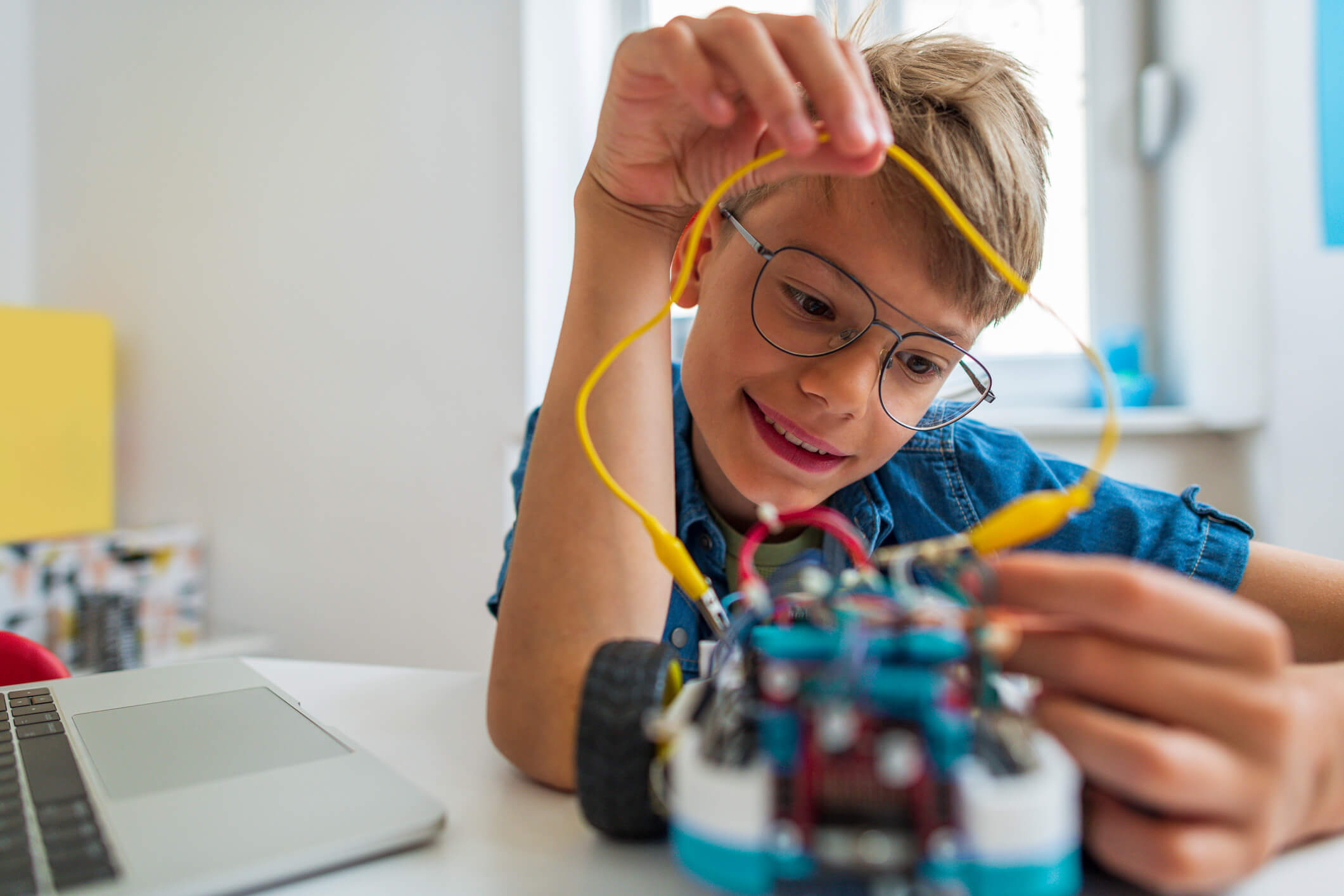
Finding the right technology program for your child can feel a little like choosing the right school—you want more than a flashy advertisement. You want experienced instructors, practical learning, a supportive environment, and a curriculum that genuinely helps your child grow. With the increasing popularity of STEM education, parents now have many options for robotics courses for kids, especially in New Jersey.
Robotics is an exciting way for children to explore engineering, coding, electronics, mathematics, science, and problem-solving. Instead of simply memorizing concepts, children can build machines, program them, test their ideas, discover mistakes, and improve their designs. That hands-on experience can make learning feel like an adventure rather than another classroom assignment.
But how do you know which program is actually right for your child? Should you choose the closest center? The most affordable course? Or the institute making the biggest promises? In this guide, we will walk through the important factors parents should consider when searching for the best robotics training institute for kids.
Why Robotics Training Is Valuable for Children
Robotics combines creativity with logical thinking. A child may begin with a simple idea—such as building a robot that moves through an obstacle course—and then discover that the project requires planning, coding, measurement, testing, and troubleshooting.
That process teaches children that problems do not always have instant answers. They learn to experiment, make adjustments, and keep going. These habits can be useful far beyond robotics, whether a child later studies computer science, engineering, mathematics, design, or another field.
Robotics Encourages Problem-Solving
When a robot refuses to move or behaves unexpectedly, children have to investigate the cause. Is the code incorrect? Is a sensor positioned incorrectly? Is a component connected improperly?
Instead of seeing failure as the end of the project, students learn to treat it as information. This problem-solving mindset is one of the biggest benefits of quality robotics courses for kids.
Robotics Makes STEM More Practical
STEM concepts can sometimes seem abstract when children only encounter them in textbooks. Robotics gives those concepts a physical form.
A child can see how programming affects movement, how measurements influence construction, and how sensors allow a machine to respond to its surroundings. Suddenly, mathematics, science, and coding become pieces of the same puzzle.
Understand What Your Child Wants to Learn
Before searching for a robotics course in New Jersey, think about your child’s interests. Does your child enjoy constructing things with their hands? Are they fascinated by computers? Do they like solving puzzles or creating their own games?
Not every robotics program has exactly the same focus. Some emphasize mechanical construction, while others spend more time on coding, electronics, automation, or advanced technology. Understanding your child’s interests will make the selection process much easier.
Consider Your Child’s Age
A robotics program designed for a seven-year-old should not teach exactly the same material as one designed for a teenager. Younger children generally benefit from simple concepts, visual programming, guided projects, and plenty of experimentation.
Older students may be ready for more advanced programming, electronics, sensors, engineering challenges, artificial intelligence, and increasingly independent projects. Always check whether the institute separates students according to age and experience.
Think About Previous Experience
Does your child already know how to code? Have they built robots before? Or will this be their first introduction to technology?
A good institute should be able to accommodate beginners without holding back students who are ready for more advanced challenges. Ask how the program handles different experience levels before enrolling.
Research the Robotics Curriculum
The curriculum is one of the most important things to investigate. A robotics center should have a clear learning pathway rather than simply offering random activities every week.
Look for a curriculum that gradually introduces new concepts. Children might begin with basic construction and programming before progressing into sensors, automation, engineering challenges, advanced coding, or other STEM topics.
What Should a Good Robotics Curriculum Include?
A strong program can include robotics fundamentals, coding, engineering, electronics, computational thinking, sensors, automation, and project-based learning.
The exact content should depend on the student’s age. What matters most is that the lessons have a purpose and that each stage builds upon skills children have already developed.
Look for Project-Based Learning
Projects are the heart of effective robotics education. Children should have opportunities to build something, test it, identify problems, and improve it.
Ask prospective institutes what students actually create during the course. If the answer is mostly worksheets and demonstrations, you may want to investigate other options. Robotics should involve doing, not just watching.
Compare Robotics Classes Near You
When parents search for robotics classes near me, convenience is naturally important. A nearby center can make regular attendance easier, especially when your child has school, sports, homework, and other activities.
However, location should not be the only deciding factor. The nearest robotics center is not automatically the best one. Compare the curriculum, instructors, class size, facilities, projects, and learning environment before making your final choice.
Check the Schedule
Look for class times that fit comfortably into your family’s routine. A program may be excellent, but if your child constantly has to rush from school to robotics class, the experience may become stressful.
Ask whether the institute provides weekday, weekend, after-school, holiday, or summer options. Flexibility can make long-term learning much easier.
Consider Travel Time
For younger children especially, excessive travel can become tiring. Ideally, the training center should be accessible enough that attending classes consistently is realistic.
If a slightly farther institute offers a substantially better curriculum and learning environment, it may still be worth the additional travel. Think about the overall value rather than distance alone.
Evaluate the Instructors
A robotics curriculum is only as effective as the people teaching it. A technically knowledgeable instructor also needs to understand how children learn.
Good instructors should be able to explain complicated ideas using simple language. They should encourage students to ask questions and guide them toward solutions rather than immediately solving every problem for them.
Ask About Instructor Experience
Find out whether instructors have experience teaching children, not simply experience with robotics or programming.
Teaching a technical subject to children requires patience and creativity. A person can be excellent at engineering but still struggle to explain a concept to a seven-year-old. Look for instructors who combine technical knowledge with strong communication skills.
Observe How Instructors Handle Mistakes
Robotics involves plenty of mistakes. In fact, mistakes are often where the most valuable learning happens.
Pay attention to whether instructors encourage experimentation or become overly focused on getting the “correct” result. Children should feel comfortable testing ideas, making adjustments, and trying again.
Check Class Size and Individual Attention
Class size can have a major impact on the learning experience. In a very large group, it can be difficult for one instructor to help every student when a project stops working.
Smaller groups generally provide more opportunities for questions, feedback, and hands-on assistance. When evaluating robotics courses center for kids in New Jersey, ask how many students typically attend each class and how many instructors supervise them.
Why Individual Guidance Matters
Imagine your child has spent twenty minutes building a robot and suddenly it stops working. If the instructor has enough time to sit with the child, ask questions, and guide the troubleshooting process, the child can turn that frustrating moment into a valuable learning experience.
Personal attention can also help instructors identify areas where a student is excelling or needs additional support.
Look at the Learning Environment
A robotics classroom should feel like a place where children want to explore. The environment should be organized, safe, welcoming, and equipped with age-appropriate technology.
Children should have enough workspace to build and test their projects. Equipment should be maintained properly, and instructors should explain how to use tools and electronic components safely.
A Positive Environment Builds Confidence
Imagine two classrooms. In one, children are afraid to touch anything because they might make a mistake. In the other, they are encouraged to experiment and explain their ideas.
Which environment would help a child learn faster? The second one, naturally. Confidence matters enormously in technical education because children need to believe they can figure things out.
Look for Hands-On Robotics Projects
The best robotics programs give children opportunities to create rather than simply consume information. Hands-on projects help students connect theory with practical results.
A project might involve programming a robot to follow a path, using sensors to detect objects, designing a mechanical structure, or solving a specific engineering challenge.
Ask to See Previous Student Projects
If possible, ask the institute to show examples of projects completed by previous students. This can give you a much better idea of what your child will actually experience.
You can also ask how projects become more challenging as students progress. A good program should not keep children at the same difficulty level indefinitely.
Explore Robotics Camps in New Jersey
A robotics courses camp New Jersey program can be a great introduction for children who are curious about robotics but are not ready to commit to a long-term course.
Camps often provide concentrated learning during school breaks, summer holidays, or other periods when children have more free time. They can also give parents an opportunity to observe whether their child genuinely enjoys robotics.
Camp or Regular Course: Which Is Better?
Neither format is automatically better. It depends on your child’s goals.
A camp can provide an exciting introduction and expose children to several robotics concepts in a short period. A regular course, on the other hand, can provide continuity and allow students to develop more advanced skills over time.
Consider the Technology and Equipment
Technology is an important part of robotics education. Ask what hardware, programming tools, robotics kits, sensors, and other resources students use.
The equipment does not have to be the most expensive available. What matters is whether it supports meaningful learning and whether students get enough hands-on time with it.
Modern Robotics Can Connect With AI and Coding
Robotics is increasingly connected with areas such as artificial intelligence, machine learning, automation, and computer programming.
Children do not need to learn advanced AI concepts immediately. However, an institute that gradually exposes students to modern technology can give them a broader understanding of how today’s technology works.
Check Whether the Program Encourages Creativity
Robotics should not always have a single correct answer. Sometimes children should have the freedom to design their own solutions.
For example, two students may be asked to build robots that complete the same challenge. Their robots might look completely different while both successfully solve the problem. That is a valuable lesson in engineering: there can be multiple paths to a good solution.
Creativity and Engineering Go Together
Engineering is not simply about following instructions. Engineers design, test, reconsider, and improve.
A good robotics institute should therefore balance structured learning with creative challenges. Children need both guidance and freedom if they are going to become confident problem-solvers.
Check Progress Tracking and Student Development
Ask how the institute measures progress. Does it use project milestones, assessments, instructor feedback, demonstrations, or skill levels?
You do not necessarily need a robotics program filled with traditional exams. Practical demonstrations can often provide a better picture of whether children understand what they are learning.
Look for Skill Progression
A child who begins by following simple instructions should gradually become capable of making independent decisions.
Over time, you may notice your child troubleshooting problems without asking for immediate help, explaining how a sensor works, modifying code, or suggesting a new design. Those are strong signs of genuine learning.
Why Brainy n Bright Is a Strong Choice for New Jersey Families
For parents looking for a robotics training center for kids in NJ, Brainy n Bright offers a STEM-focused approach designed to help young learners explore robotics and technology through practical education.
Brainy n Bright positions robotics within the wider STEM ecosystem, helping children develop technical understanding alongside creativity, logical reasoning, problem-solving, and confidence.
A Broader STEM Learning Experience
Robotics is more powerful when children understand its connection to other fields. Coding controls behavior, engineering shapes physical structures, mathematics supports measurements and logic, and science helps explain how systems operate.
Brainy n Bright’s STEM-oriented approach can help children see those connections instead of treating robotics as an isolated hobby.
Learning Through Practical Activities
Children naturally learn through experimentation. Brainy n Bright emphasizes hands-on learning so students can engage with technology instead of simply listening to explanations.
For parents comparing the best robotics courses for kids, practical learning, age-appropriate instruction, and opportunities to develop problem-solving skills are important factors to consider.
Compare Programs Before Making Your Decision
Once you have identified several potential institutes, create a simple comparison. Consider curriculum, instructors, class size, projects, location, schedule, equipment, learning environment, and progression opportunities.
Do not be afraid to contact each center with questions. A reputable institute should be willing to explain its teaching methods and tell you what children will learn.
Do Not Choose Based Only on Price
Cost is obviously important for families, but the cheapest program is not always the best value.
Think about what you receive for the fee. If one program provides more hands-on time, smaller classes, better mentorship, stronger progression, and meaningful projects, it may provide greater value even if the initial price is higher.
Watch for Marketing Claims
Search results can make every institute sound like the “best” option. Instead of accepting marketing language at face value, look for evidence.
Ask what students learn, what projects they complete, how instructors teach, and how the program supports beginners. Real educational value is found in the learning experience, not simply in promotional phrases.
Reviews Can Help, But Look at the Bigger Picture
Parent reviews can provide useful insights into communication, teaching quality, organization, and student experiences.
However, do not make your entire decision based on reviews. Combine reviews with curriculum information, instructor details, project examples, and your own observations.
Choose a Program That Can Grow With Your Child
One of the smartest questions to ask is what happens after the beginner level. If your child becomes passionate about robotics, will the institute provide more advanced learning opportunities?
A long-term pathway can be extremely valuable. Children can begin with basic construction and coding and gradually move toward more complex robotics, engineering, AI, automation, and programming projects.
Think Beyond the First Class
The goal should not simply be to find an entertaining class for a few weeks. You want to create an environment where your child’s curiosity can continue developing.
When children see that each new project is slightly more challenging than the previous one, they can develop a growth mindset and become increasingly comfortable with difficult problems.
What Makes the Best Robotics Training Institute for Kids?
The best robotics training institute for kids is not necessarily the one with the biggest facility or the most impressive advertising. It is the one that combines effective teaching, practical learning, age-appropriate challenges, experienced instructors, and a supportive environment.
Children should leave class feeling that they built something, learned something, or solved something. That sense of accomplishment is what keeps them interested.
A Good Program Should Make Kids Curious
Ask your child what they did after class. Are they excited to tell you about their robot? Are they asking questions at home? Are they wondering how to make their project better?
Those reactions are powerful indicators. When education creates curiosity, learning continues even after the classroom session ends.
Final Checklist Before Enrolling
Before choosing a robotics training center for kids in NJ, take a final look at the following factors:
- Age-appropriate curriculum
- Experienced and child-friendly instructors
- Hands-on robotics projects
- Reasonable class sizes
- Safe and organized learning environment
- Modern and suitable equipment
- Coding and STEM integration
- Opportunities for creativity
- Progress tracking
- Convenient schedule and location
- Beginner and advanced learning pathways
- Positive student learning experience
You do not need every program to look identical. Your goal is to find the one that best matches your child’s needs, interests, and learning style.
Conclusion
Finding the best robotics training institute for kids takes a little research, but it is worth the effort. Start by understanding what your child enjoys, then investigate the curriculum, instructors, projects, class size, technology, learning environment, and opportunities for long-term growth.
A great robotics program should feel less like memorizing a textbook and more like entering a workshop where every problem is an invitation to create something new. Children should be encouraged to experiment, make mistakes, ask questions, collaborate, and discover their own solutions.
For families searching for robotics courses for kids, a robotics course in New Jersey, robotics classes near me, or a robotic training center for kids in NJ, Brainy n Bright is a strong STEM and robotics training option to explore. Its focus on hands-on technology learning can help children build practical skills while developing creativity, confidence, and problem-solving abilities.
The right robotics experience can be the spark that turns a child’s simple curiosity about machines into a lasting interest in STEM, coding, engineering, robotics, and emerging technology.
